
Guide
Temple Etiquette in Thailand: Clothing, Behaviour, Photos and Monks
Dress code, shoes, photos, Buddha images, monks and donations: what applies in a temple, how strict Wat Pho, the palace and Doi Suthep are, and what disrespect can cost.
- Category: Daily life
- 11 min read
- Updated:26 October 202626/10/2026
Contents of this article10 sections
No Thai will shout at you in a temple if you get something wrong. They will still notice, and at the entrance of the big complexes the staff will simply send you away if in doubt. The rules are manageable and quickly learned. As of October 2026.
In short
- Shoulders and knees covered, nothing tight, nothing see-through. This is checked most strictly at the Grand Palace in Bangkok.
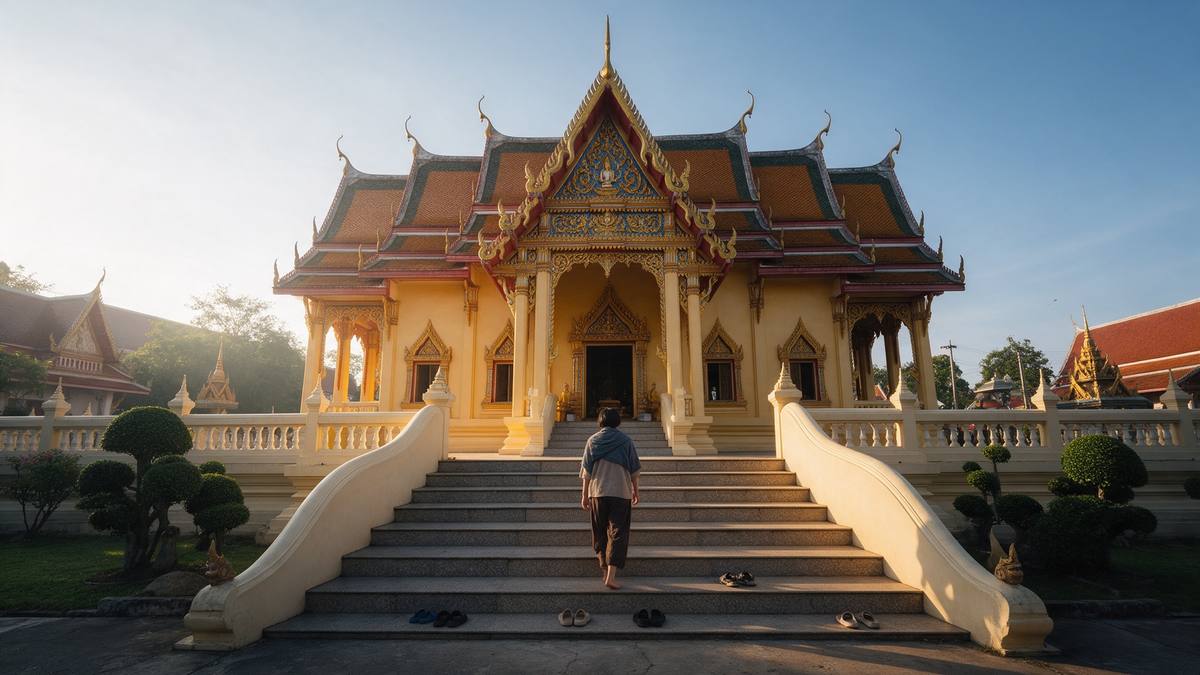
- Shoes off before every building with a Buddha image. You also take off your hat and sunglasses there.
- Feet never point at Buddha images or monks. Sit with your legs to the side.
- Women do not touch monks and do not hand them anything directly.
- Anyone who mocks a Buddha image, for example by standing on it or aping it, risks up to seven years in prison under Thai criminal law.
What to wear in a temple
Temples require covered shoulders, long dresses or long trousers, and shoes taken off. In everyday terms: a top with sleeves and something that reaches below the knee.
For men this is easy, as thin long trousers are in the suitcase anyway. For women, the usual problems are tank tops, short shorts and summer dresses with spaghetti straps. A scarf over the shoulders and a wrap skirt from your daypack solve this in ten seconds. If you have not yet decided what goes in your suitcase, you will also find temple clothing in the packing list for Thailand.
Almost everywhere, these are not accepted:
- Sleeveless shirts, vests and tank tops
- Shorts and miniskirts
- See-through or very tight clothing
- Ripped trousers
- Swimwear
How seriously this is taken depends on the temple. At the Grand Palace in Bangkok, sleeveless tops, vests, cropped tops, see-through fabrics, shorts, ripped trousers, tight trousers, cycling shorts, miniskirts, skorts and pyjamas are expressly not allowed. In smaller village temples and on the islands you will hardly be checked. That is no excuse.
Shoes, hat, phone
You take your shoes off before entering a building with a Buddha image. There are usually racks or a pile of sandals. At Wat Pho this expressly applies to all religious buildings. Flip-flops and slip-ons are therefore the best choice for a temple day, lace-up boots are a nuisance.
You take off your hat and sunglasses inside the buildings. Turn your phone down, ideally to silent. Eating and drinking are not allowed inside the building, and smoking is not allowed on the temple grounds either. Alcohol is generally forbidden in temples. More on the alcohol rules is in the guide What is banned in Thailand.
You do not step on thresholds, you step over them. According to a widespread belief, a spirit lives there.
How to behave in front of Buddha images
The head is considered the highest part of the body and the feet the lowest. Almost all the rules you need in front of a Buddha image follow from this:
- Sit so that your feet point to the side or backwards. When sitting cross-legged, the sole of your foot can easily end up pointing at the image.
- Do not sit higher than the image, and do not sit on the altar or the base.
- Do not climb on images, pagodas or railings, and do not touch anything that you are not expressly allowed to touch.
- Do not point your finger at an image.
- If possible, do not turn your back on the main image in the hall.
You walk around a pagoda clockwise. At Doi Suthep in Chiang Mai, worshippers walk around the chedi three times, and visitors may join in. If you join in, you are doing nothing wrong.
Monks
Monks are regarded as representatives of the Buddha, and they are treated that way. Visitors should be polite and reserved, in both speech and behaviour. Women must not touch monks and novices. The ban does not apply to men.
In practice it looks like this:
- Women do not press anything directly into a monk’s hand. They put the item on a cloth or a table, or pass it on to a male companion.
- On buses and trains, a monk often will not sit next to a woman. This is not an insult, just make room.
- Do not sit higher than a monk. Do not photograph monks from close up without asking.
At Wat Pho, the area the monks use for their rituals is also closed to women. Look out for signs.
Photos
In Thailand there is generally no ban on taking photographs, apart from military sites. When photographing people, use tact, as you would anywhere. In temples this only partly changes:
- Outdoor areas are usually fine, but in main halls photography is often prohibited. Signs with a crossed-out camera apply.
- Leave the flash off, especially near monks or during ceremonies.
- Do not photograph people at prayer without permission. The same goes for monks from close up.
- At Doi Suthep, photography is allowed everywhere outside the inner sanctuary, and drones are banned on the whole mountain.
- At the Grand Palace, no drones may fly over the grounds. For photos and filming inside the palace there is also a written regulation from the Bureau of the Royal Household.
It is the pose that is delicate, not the photo itself. Anyone who apes the image, leans on it or sits on it does not have a harmless travel story. Before you press the shutter, ask yourself briefly whether a Thai person next to you would laugh along.
What disrespect can cost
The Thai criminal code protects objects and places that believers revere. For acts that insult a religion, Section 206 provides for one to seven years in prison, a fine of 20,000 to 140,000 baht (roughly 550 to 3,900 euros), or both. A 2007 Supreme Court judgment concerned a man who stood with his foot on a Buddha image, aped its posture and pulled faces. The court saw this as contempt for Buddhism.
For holidaymakers this does not mean that every little thing leads to criminal proceedings. What matters is whether the act shows contempt for the religion. A slip without contempt is unlikely to fall under it. But even without a charge the damage can quickly be serious: anyone who endangers public order, for example through aggressive behaviour or behaviour that is disrespectful of Thai culture, must expect revocation of their visa, deportation at their own expense and a re-entry ban. Every conviction, even for a minor offence, leads to deportation after the sentence and an indefinite entry ban. If you have problems with the authorities, the German embassy in Bangkok is the point of contact.
The best-known temples at a glance
Grand Palace and Wat Phra Kaeo, Bangkok. Foreigners pay 500 baht admission. This includes the Temple of the Emerald Buddha, as well as the Queen Sirikit Museum of Textiles. It is open daily from 8:30 am to 3:30 pm. The dress code is checked particularly strictly there, so come prepared.
Wat Pho, Bangkok. The temple with the reclining Buddha is open daily from 8 am to 7:30 pm and costs 300 baht admission. Children under 120 centimetres in height pay nothing. The house rules say no shorts, for women expressly nothing above the knee, shoes off before the religious buildings, and never climb on the images. Next to the temple is the famous massage school.
Wat Arun, Bangkok. The temple on the west bank of the river requires the same basics: shoulders and knees covered. Foreigners pay 200 baht, and it is open daily from 8 am to 6 pm. You will find the way across the river in the Bangkok destination guide.
Wat Phra That Doi Suthep, Chiang Mai. Admission to the upper terrace costs 30 baht (as of 2026). Shoulders and knees must be covered, and shoes come off before the inner courtyard and the halls. If you are dressed too lightly, you can usually borrow a sarong for a 100 baht deposit at the cable car station or at the top of the stairs. Do not rely on this, your own scarf is safer. Take off your hat and sunglasses, talk quietly, and strike the prayer bells only once. More about the city and its temples is in the Chiang Mai destination guide.
Ayutthaya. In the ruins the situation is more relaxed, because much of it is open ground. The same still applies: do not climb on walls and images, and be appropriately dressed in active temple areas. You will find the sites in the Ayutthaya destination guide.
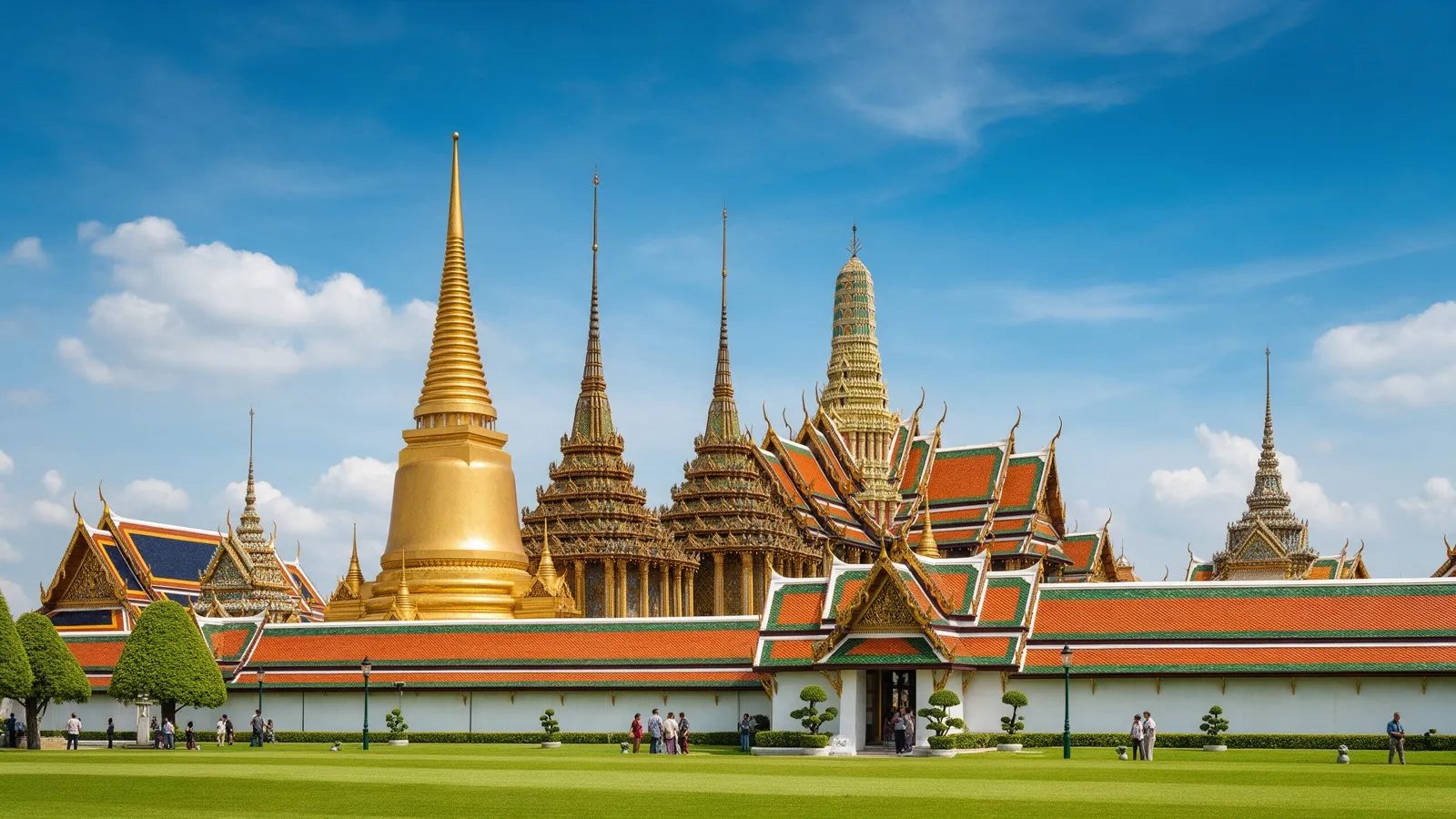
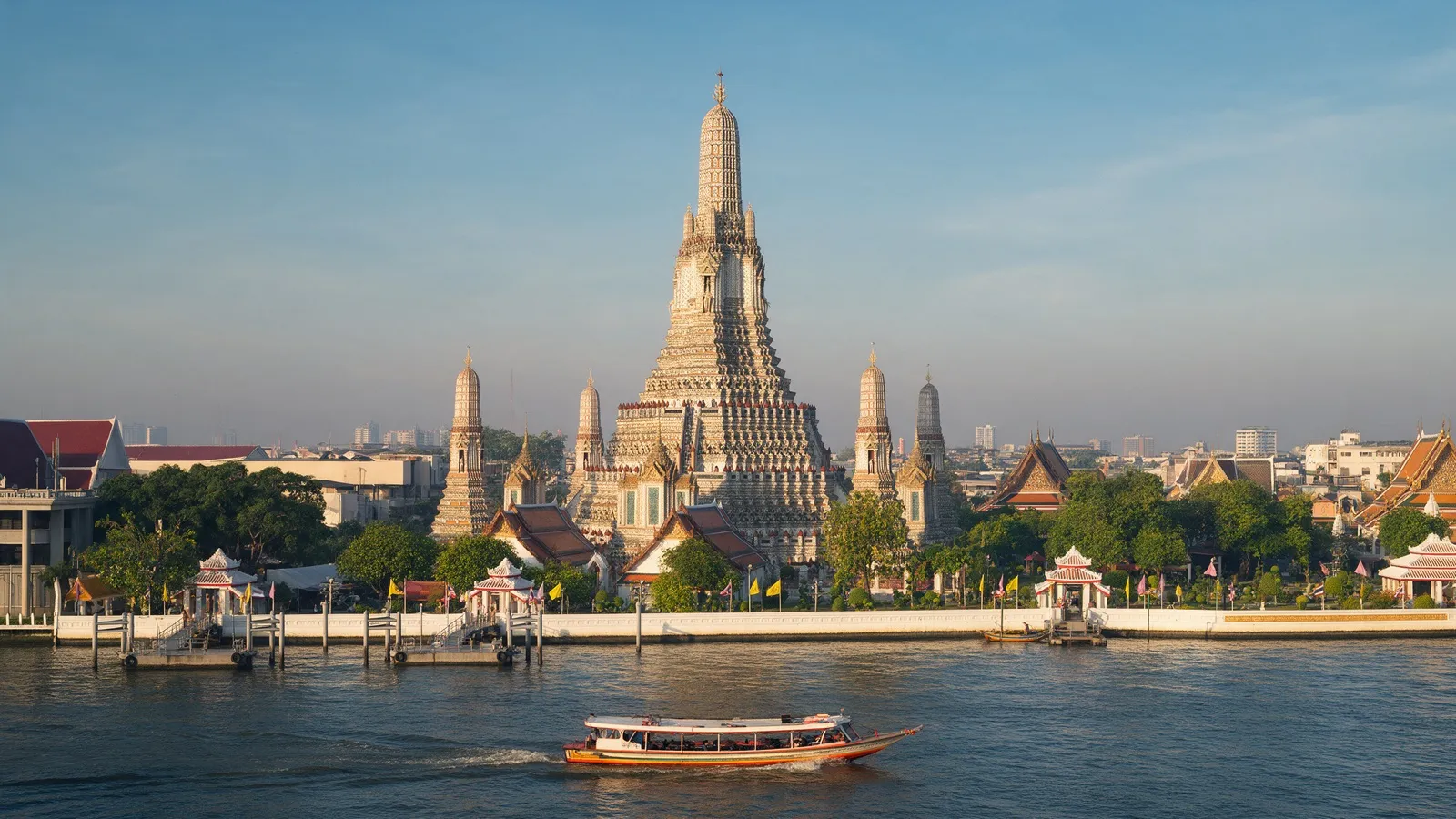
If you want to visit the two best-known temples in Bangkok, you can secure a ticket in advance. The clothing and behaviour rules described above apply at both the Grand Palace and Wat Arun. Tickets are available from Trip.com for the Grand Palace and for Wat Arun.
Donations and offerings
Almost every temple has a donation box, and almost every visitor puts something in. There is no fixed amount. I put in a few small notes when I have liked a place. If you have already paid admission, you do not have to donate in addition.
At some entrances, vendors sell flowers, incense sticks, candles or gold leaf. These are real offerings, which you place at the altar or carry when you walk around. You stick gold leaf on images only where others do so too. If the practice is new to you, watch for a minute before you join in.
Be careful with people who approach you outside the temple and want to sell you amulets, bracelets or blessings. This rarely has anything to do with the temple. More about such scams is in the guide Scams and safety in Thailand.
Temples with children
Small children get more leeway, but they too should not run or climb on images. You dress older children like adults. How to make the day with the family work is in the guide Thailand with children.
Frequently asked questions
What do I have to wear in a temple in Thailand?
Shoulders and knees covered, clothing not tight and not see-through. Sleeveless shirts, shorts, miniskirts and ripped trousers are mostly not allowed. A scarf and a wrap skirt in your daypack solve the problem.
Do I have to take my shoes off in a temple?
Yes, before every building with a Buddha image, and at Wat Pho, according to the house rules, before all religious buildings. Shoes that you can put on and take off easily are practical.
Can I take photos in a temple?
In Thailand there is generally no ban on taking photographs, apart from military sites. In temples, though, signs apply, and it is better to avoid flash and close-up shots of people at prayer or monks. Silly poses with the Buddha image are taboo.
Is a woman allowed to touch a monk?
No. Women do not touch monks and novices and do not hand them anything directly. You put items on a cloth or a table, or a male companion passes them on.
What happens if I mock a Buddha image?
Section 206 of the criminal code provides for one to seven years in prison or a fine of 20,000 to 140,000 baht, and both are also possible. The condition is that the act insults the religion, for example standing on an image and mocking it. A conviction leads to deportation and a ban on entry.