
Central
Bangkok
Bangkok district by district: where to stay, temples with hours and prices, street food, markets, rooftop bars, massage, trains and boats, day trips and heat tips.
Updated: 19 October 2026
Region
Central
Temples, the river and street food stalls
Best time to visit
November to February, with December to February the driest. March to May gets very hot, September and October are the wettest.
Getting there
Suvarnabhumi Airport (BKK), then the Airport Rail Link or a taxi into the city
Top highlights
- Grand Palace with Wat Phra Kaeo and the Emerald Buddha
- Wat Pho with the 46-metre reclining Buddha
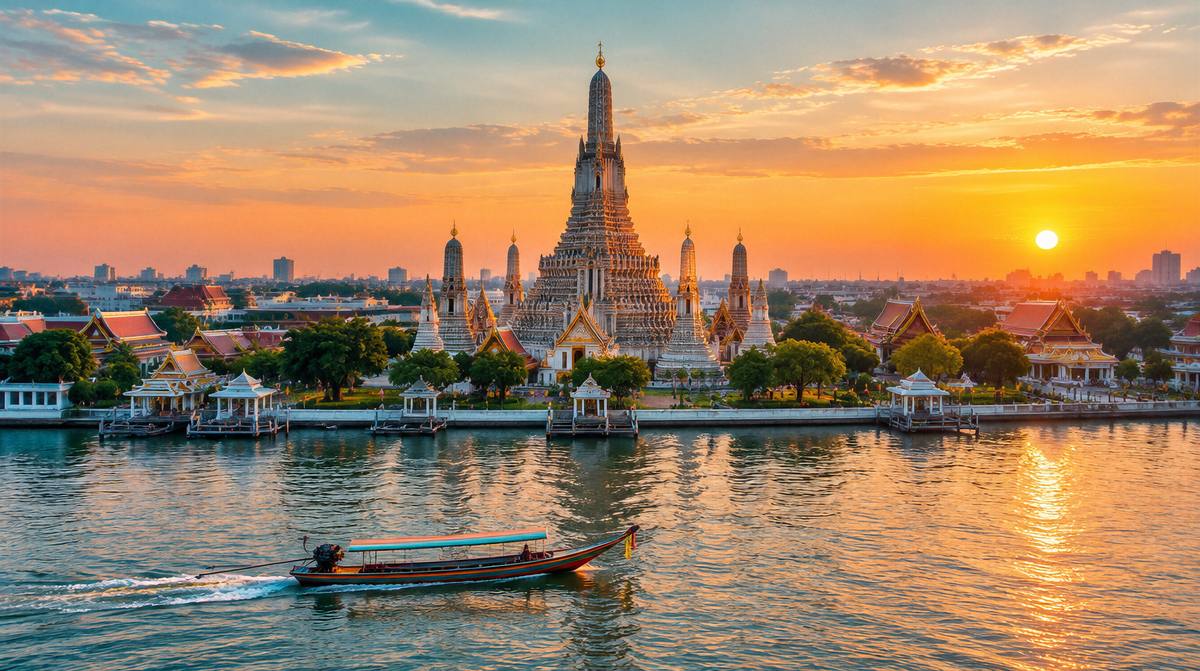
- Wat Arun, the "Temple of Dawn", on the west bank of the river
Rain and temperature through the year
- Jan13 mm, 32 °C, drynow
- Feb20 mm, 33 °C, drynow
- Mar42 mm, 34 °C, drynow
- Apr91 mm, 35 °C, changeablenow
- May248 mm, 34 °C, rainy seasonnow
- Jun157 mm, 34 °C, rainy seasonnow
- Jul175 mm, 33 °C, rainy seasonnow
- Aug219 mm, 33 °C, rainy seasonnow
- Sept334 mm, 33 °C, rainy seasonnow
- Oct292 mm, 33 °C, rainy seasonnow
- Nov50 mm, 32 °C, drynow
- Dec6 mm, 32 °C, drynow
Line: average daily high in °C. Band and number: rain in mm per month · Weather data: Station Bangkok · Source: Thai Meteorological Department (TMD), Klimamittel 1981–2010, gerundet · Weather in Bangkok in detail
Contents of this article12 sections
Most trips to Thailand begin in Bangkok. The city is loud, hot and huge, with around 10 million people living here. Even so, the big temples, a quiet park and the street food stalls are often only a few minutes apart by boat. If you prefer a slower pace, a bit of planning will see you through.
Bangkok is not a city with one centre but a string of districts, each with its own character. The temples are in the old town, Chinatown is where people eat in the evening, and Sukhumvit has the shopping centres and bars. Where you stay determines how tiring your days will be.
Getting there
Long-haul flights from Germany usually land at Suvarnabhumi Airport (BKK). There are direct flights from Frankfurt and Munich. The easiest way into the city is by train or taxi.
A nonstop flight from Frankfurt to Bangkok takes a good eleven hours, and with a stopover it takes longer. You can compare the outbound flight and the return flight by date, airline and price at Trip.com.
The Airport Rail Link leaves from the lower level (level B1) of the main terminal, from 5:30 am to midnight. The City Line stops at every station and takes up to 30 minutes to the terminus at Phaya Thai (figure from 2020). There you change to the Skytrain (BTS).
Taxis wait around the clock on level 1 between gates 4 and 7. You take a queue ticket and pay the metered fare plus a 50 baht airport surcharge directly to the driver.
After a long flight and with a big suitcase, the taxi is usually more comfortable, even if it takes longer in traffic. In Bangkok, generally only taxis marked “Taxi Meter” use the meter.
Getting around the city
The easiest way to get around is the Skytrain (BTS) and the underground (MRT), air-conditioned and bypassing the traffic jams. On the MRT, meaning the blue, purple, yellow and pink lines, you simply tap your contactless credit card at the gate. The old MRT stored-value cards have not been valid since June 2026. This does not yet work on the Skytrain, where you buy a single ticket from the machine or a Rabbit Card. For everything about lines, tickets and changing trains, see the guide BTS Skytrain in Bangkok. A trip costs 17 to 47 baht in the core network.
Express boats run on the river. The orange line has cost a flat 19 baht since October 2026. The tourist boat with the blue flag is more expensive, but it has announcements in English. To reach Wat Arun, you take the small ferry across from Tha Tien for a few baht.
Taxis use a meter, which starts at 35 baht. Grab and Bolt work everywhere in the city, including at the airport. Tuk-tuks are an experience but more expensive than a taxi, so agree the price beforehand.
You should know about one scam: someone approaches you in front of the palace and says it is closed today. Then comes a cheap tuk-tuk tour that ends in gem or tailor shops. The palace is usually open every day. Just keep walking to the entrance.
The districts
Old town and Rattanakosin
This is where the Grand Palace and Wat Pho stand, with Wat Arun opposite on the river. You reach the temples on foot or by boat via Tha Chang (N9) and Tha Tien (N8) piers. For some years now the MRT has also had a stop at Sanam Chai station, right by Wat Pho. It is quiet here in the evening. For a week with lots of sightseeing, this is a good location.
Banglamphu and Khao San
Just to the north is Banglamphu with Khao San Road. It is cheap, crowded and loud until late at night, and the crowd is young. For somewhere quieter, stay a few lanes away on Phra Athit Road by the river.
Chinatown
Chinatown, around the roughly 1.5-kilometre-long Yaowarat Road, is loud and crowded, with shops, shrines and, in the evening, a great many food stalls that locals visit just as much as tourists. Since 2019 the MRT has had a stop here, Wat Mangkon station. On Mondays many stalls are closed.
By the river
The hotels on the Chao Phraya are often the most expensive in the city, but you get a river view. You travel by boat instead of by train, and in the evening you look out at the lit-up temples. For couples and a first visit, this is a lovely choice.
Silom and Sathorn
Silom and Sathorn are the business district, full of offices by day and quieter in the evening. The Skytrain and underground stop here, and Lumphini Park is right next door. Around Patpong Road you will find a night market and bars.
Siam
Around Siam station are the big shopping centres such as Siam Paragon and MBK. From here the Skytrain takes you in every direction. If you enjoy browsing and prefer air-conditioned walkways, this is a practical base.
Sukhumvit
Sukhumvit Road is long and has many faces. Around Nana and Asok you are conveniently close to the Skytrain and underground, but the road also has red-light areas such as Nana Plaza and Soi Cowboy. Phrom Phong with its shopping centres is quieter and popular with families. Thonglor and Ekkamai have many good restaurants and bars and suit longer stays better. From there, though, it takes 45 to 60 minutes to reach the palace.
Ari
Ari in the north is a residential district with many cafés and small restaurants, without the tourist crowds. The Skytrain stops right there, but there are only a few hotels.
Which district suits you
For a first trip with lots of temples, you are best off staying by the river or in the old town. If you want short distances by train and shopping centres nearby, stay in Siam or Silom. For longer stays with good restaurants, Phrom Phong, Thonglor and Ari are a good fit. When booking, check carefully how far it really is to the nearest station or pier. In temperatures above 30 degrees, even a 600-metre walk is no longer a stroll.
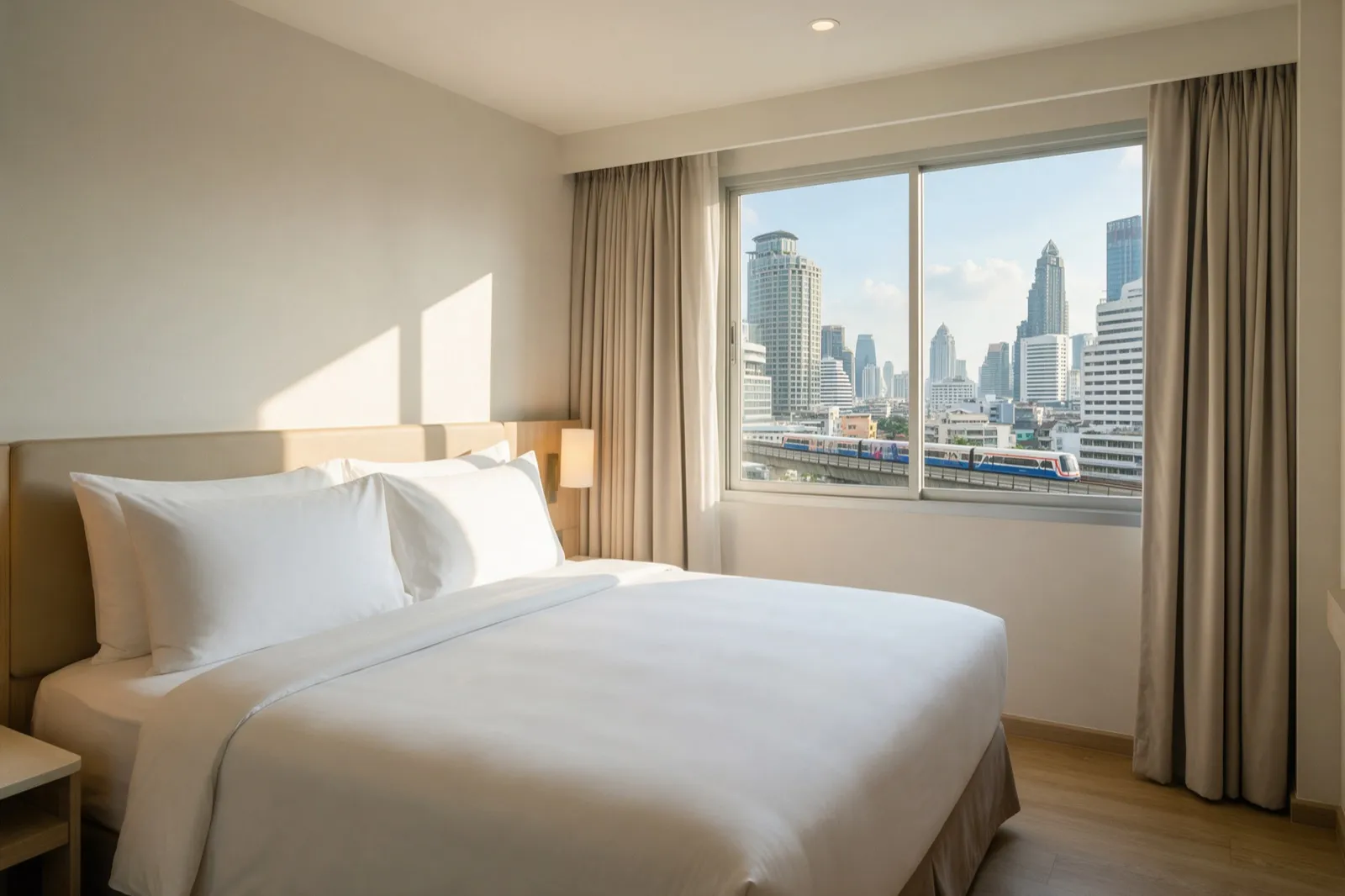
Once you have decided on a district, it is worth looking at the hotels there. When choosing, pay attention to the distance to the nearest station or pier, because above 30 degrees even 600 metres feels long. Compare hotels in Bangkok by location and price.
Temples and sights
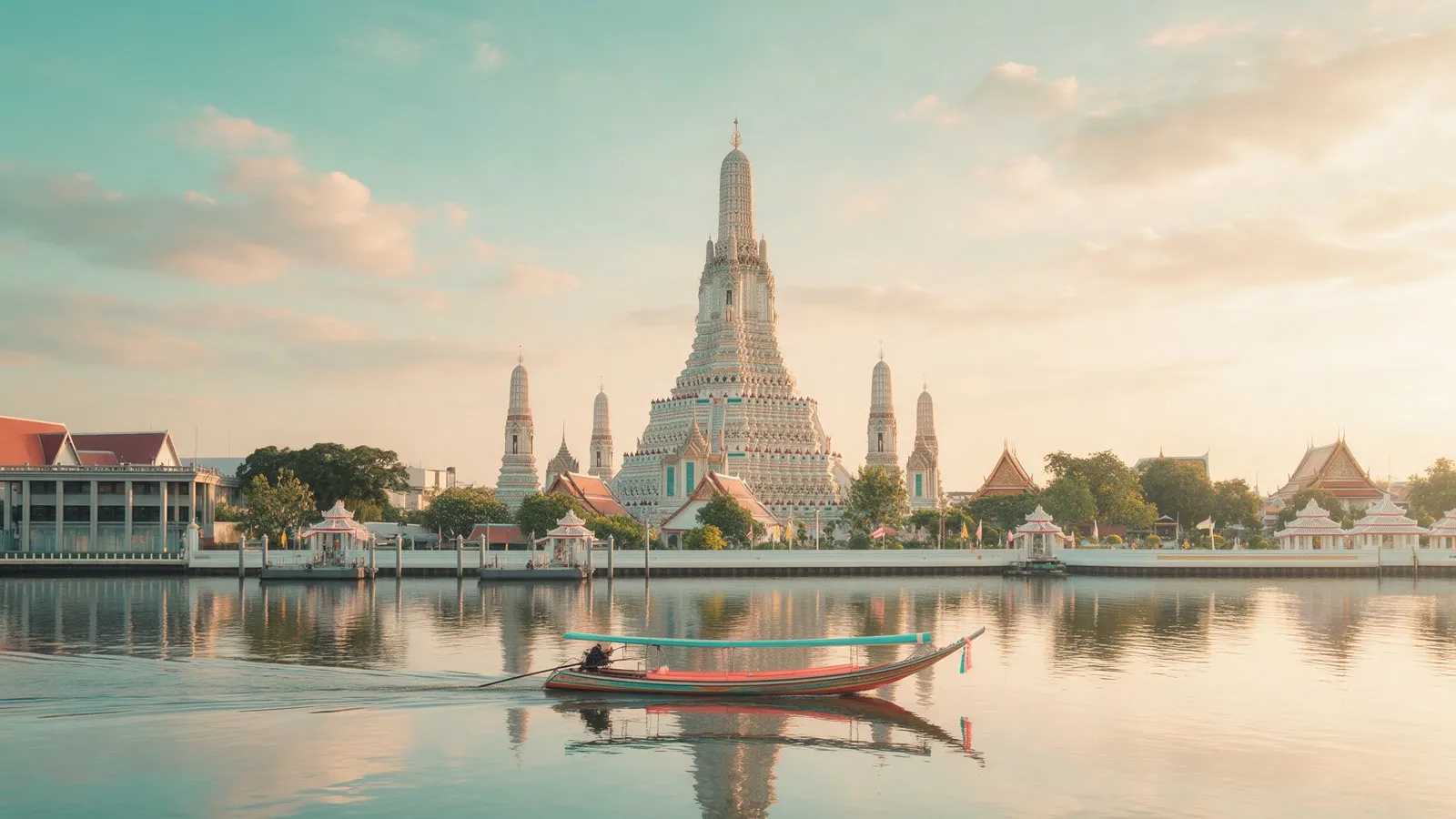
Bangkok: Grand Palace, Wat Pho and Wat Arun guided tour
A guided small-group tour of the three great temples. Admission is paid on top in cash.
- 5 hours
- Guide in English
- Free cancellation up to 24 hours in advance
from €20 per personAs of 21 October 2026
 Check availability
Grand Palace and Wat Phra Kaeo
This is the best-known sight in the city, a complex of gilded temples and halls. Wat Phra Kaeo houses the Emerald Buddha, the most revered Buddha image in the country. It is open daily from 8:30 am to 3:30 pm, and foreigners pay 500 baht admission. This includes Wat Phra Kaeo and the Queen Sirikit Museum of Textiles on the grounds. The dress code is strict: no sleeveless tops, no shorts or miniskirts, no ripped or tight trousers.
Wat Pho
About ten minutes on foot from the palace is the temple with the gilded reclining Buddha, 46 metres long and 15 metres high. It is open daily from 8 am to 7:30 pm, and admission costs 300 baht. Wat Pho is also the home of traditional Thai massage, more on that below.
Wat Arun
The “Temple of Dawn” stands on the other side of the river in Thonburi. Its main tower is 82 metres high and studded with glazed porcelain shards. It is open daily from 8 am to 6 pm, admission 200 baht. It looks best from the opposite bank, ideally at sunset.
Lumphini Park
The park covers 58 hectares, has two lakes and many walking paths. In the early morning lots of people do yoga and tai chi here. Entry is free, and it opens early in the morning.
Khlongs and river
On a trip through the khlongs, the old canals in Thonburi, you see how people live by the water. You hire the longtail boats at the piers on the river. Agree the price and the duration firmly beforehand, as quotes vary widely.
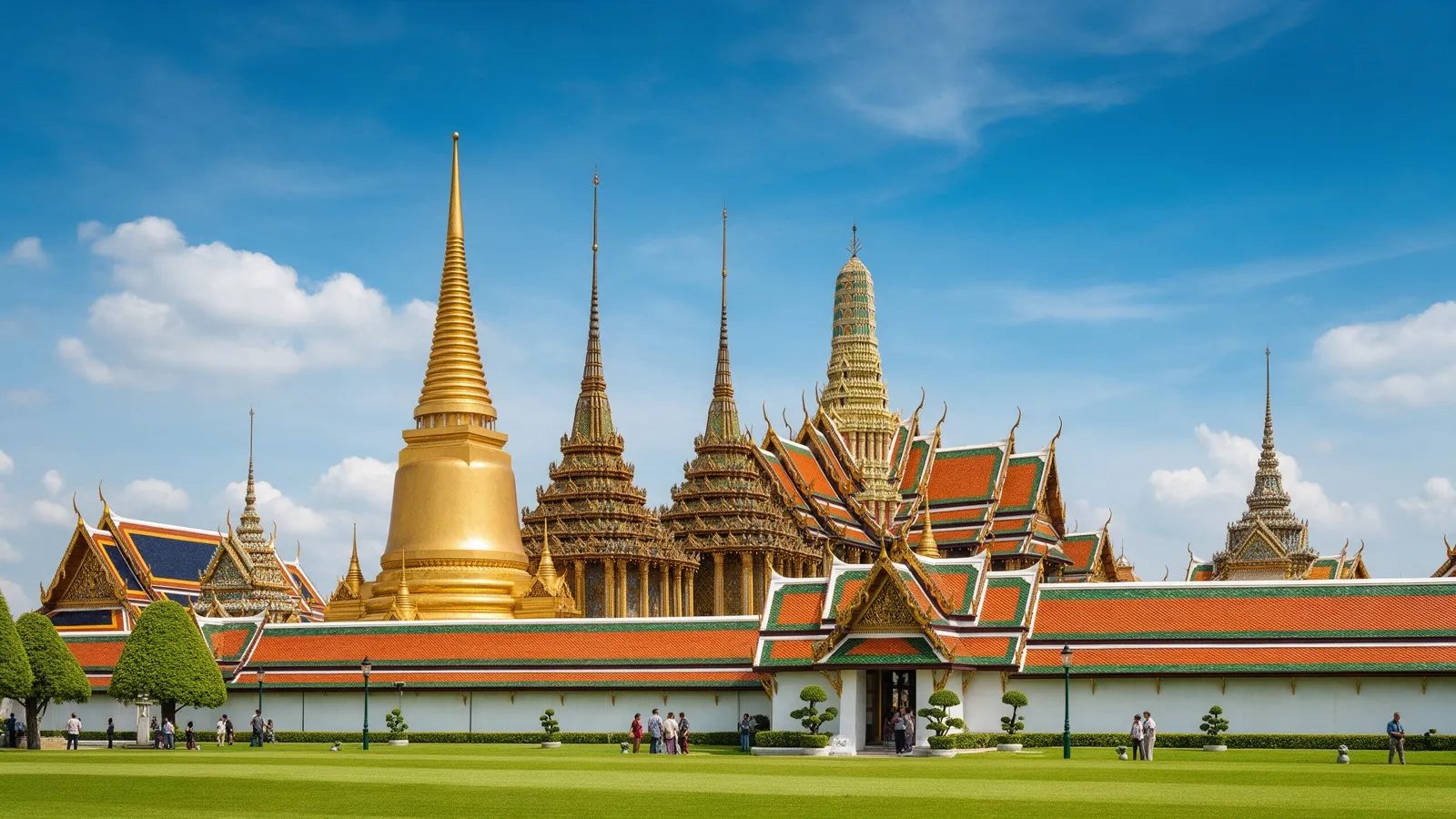
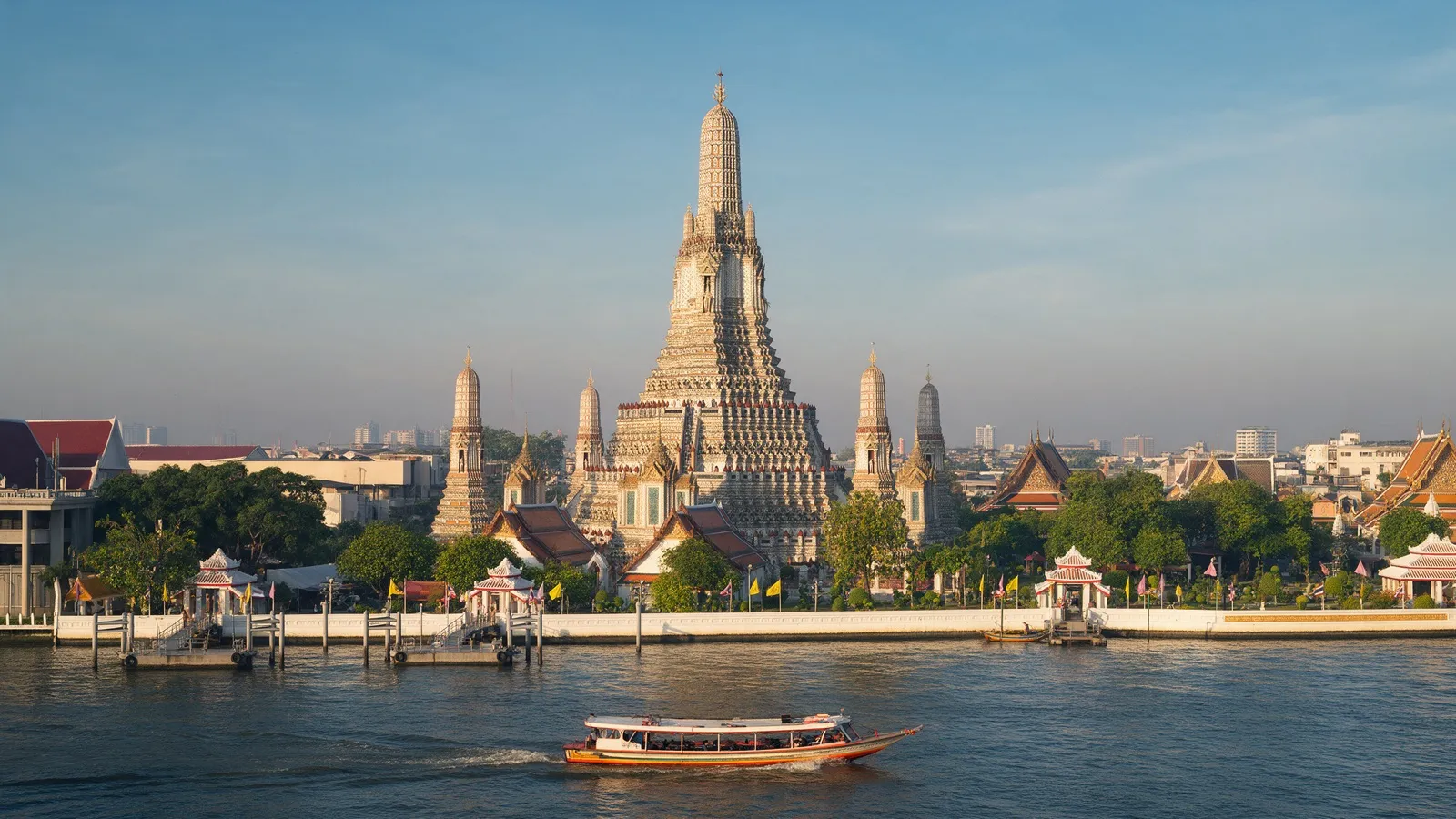
The Grand Palace and Wat Arun are close together on the river and are easy to combine in one morning. It is best to visit the palace early in the day. Tickets are available in advance at Trip.com, for the Grand Palace and for Wat Arun.
Food
You eat very well in Bangkok, and most of it is cheap. In Chinatown it gets crowded from about 5 pm, and the busiest time is between 7 pm and 9 pm. A noodle soup there costs 50 to 80 baht, and you usually pay in cash.
One famous name is Jay Fai, a street food stall in the old town with a Michelin star. It is open Wednesday to Saturday, you pay in cash and you often have a long wait.
If it is too hot for you on the street, head to the shopping centre food courts. At Pier 21 in Terminal 21 at Asok station, dishes cost 30 to 80 baht. In the basement of ICONSIAM on the river is SookSiam, a recreated market with stalls from all parts of the country, open daily from 10 am to 10 pm.

Bangkok: authentic Thai walking food tour in Yaowarat
A walking food tour through the Chinatown district of Yaowarat with several tastings.
- 3 hours
- Guide in English, German and Spanish
- Free cancellation up to 24 hours in advance
from €30 per personAs of 21 October 2026
Check availability
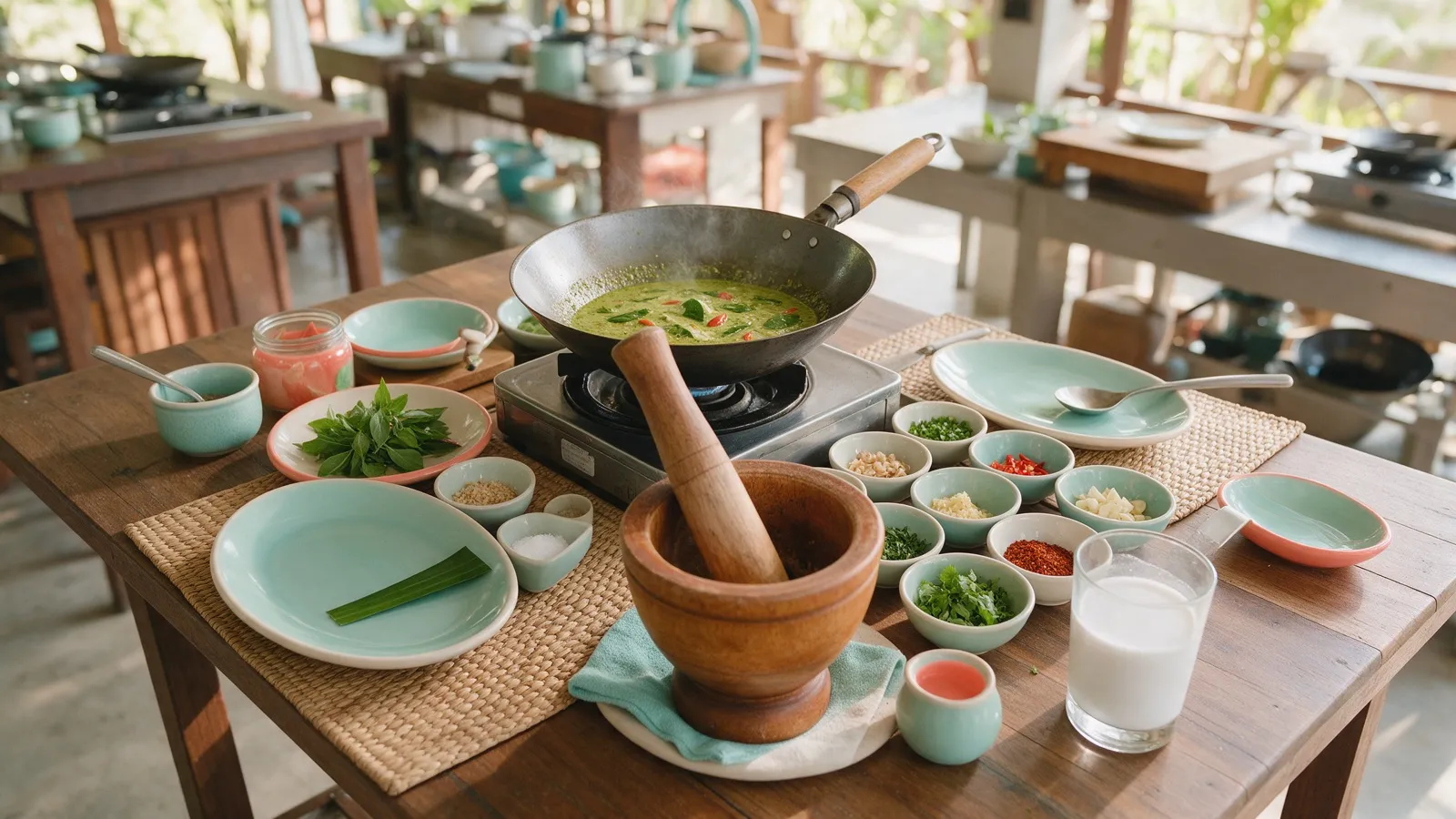
Bangkok: “White Lotus” Thai cooking class with market tour
First a walk through a local market, then you cook four Thai dishes yourself, with fresh coconut milk.
- 3 to 3.5 hours
- Market visit and cooking four dishes yourself
- Free cancellation up to 24 hours in advance
from €29 per personAs of 21 October 2026
Check availabilityMarkets and shopping
Chatuchak Weekend Market is huge. It is fully open on Saturdays and Sundays from 9 am to 6 pm, and you reach it by Skytrain to Mo Chit or by underground to Chatuchak Park. Go early, as from midday it gets hot and crowded.
In the evening there are night markets. Jodd Fairs on Ratchadaphisek Road is open until late at night and is next to Thailand Cultural Centre MRT station. Asiatique on the river is open daily from 11 am to midnight, and from 4 pm a free shuttle boat runs from Sathorn Pier.
You do not have to go far for shopping centres: Siam Paragon and MBK are at Siam station, and ICONSIAM is on the river with its own pier. You will find cheap clothing in the Pratunam district.
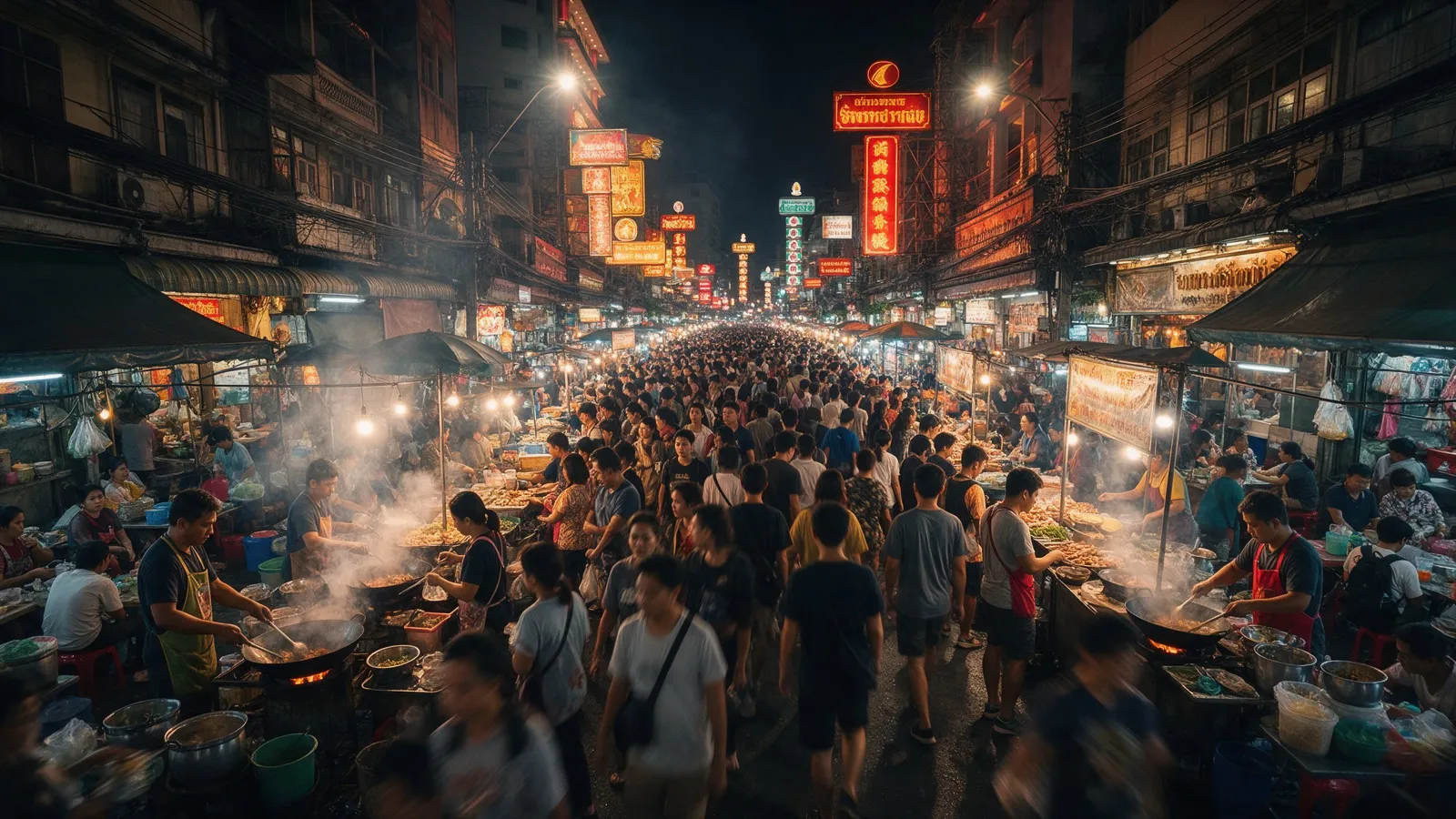
You do not need a ticket for Chinatown, and you get there on the MRT Blue Line to Wat Mangkon station. The food stalls open between about 5 pm and 6 pm, the peak is between 7 pm and 9 pm, and many are closed on Mondays. Food tours and guided evening walks are available at Trip.com.
Nightlife
Bangkok has many rooftop bars. The Sky Bar at lebua is on the 64th floor. Most cocktails there cost 1,300 to 1,500 baht (as of October 2026), plus 10 percent service and 7 percent tax. You get in as long as you avoid sportswear and flip-flops, and men are also let in wearing smart shorts. The Vertigo bar on top of the Banyan Tree is closed for renovation and reopens on 2 December 2026. Cheaper rooftops can be found on Sukhumvit, where cocktails cost more like 350 to 500 baht.
You can hear live music at the Saxophone Pub at Victory Monument and at Brown Sugar, both of which have been around since the 1980s. On Khao San Road a beer costs 80 to 150 baht, and in Thonglor and Ekkamai the bars are more upmarket.
The red-light areas are on Sukhumvit at Nana Plaza and Soi Cowboy, and in Patpong in Silom. There the biggest risk is a bill that is much higher than expected. Ask to see the prices. Most bars close at 2 am.
Massage
The best-known place is the massage school at Wat Pho. An hour of Thai or foot massage costs 520 baht there, half an hour 340 baht. In the streets of the city you usually pay 250 to 400 baht for an hour, and considerably more in a hotel spa. A tip of 50 to 100 baht is usual.
Day trips
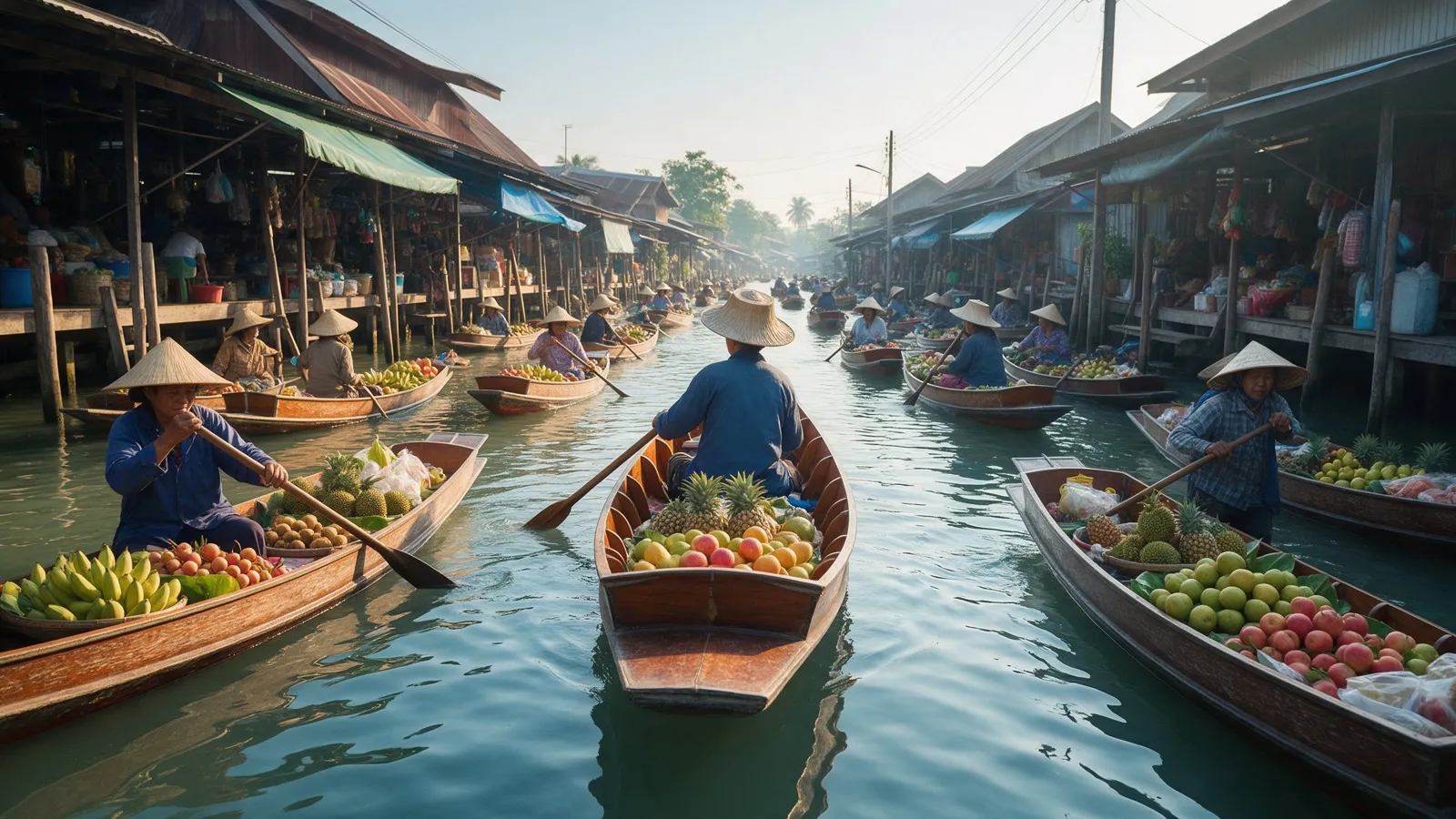
The floating markets are a classic. Damnoen Saduak is about 100 kilometres away, so you have to set off early. Ideally you are there between 7 am and 9:30 am. Closer and less touristy are Taling Chan and Khlong Lat Mayom in Thonburi, both held at weekends.
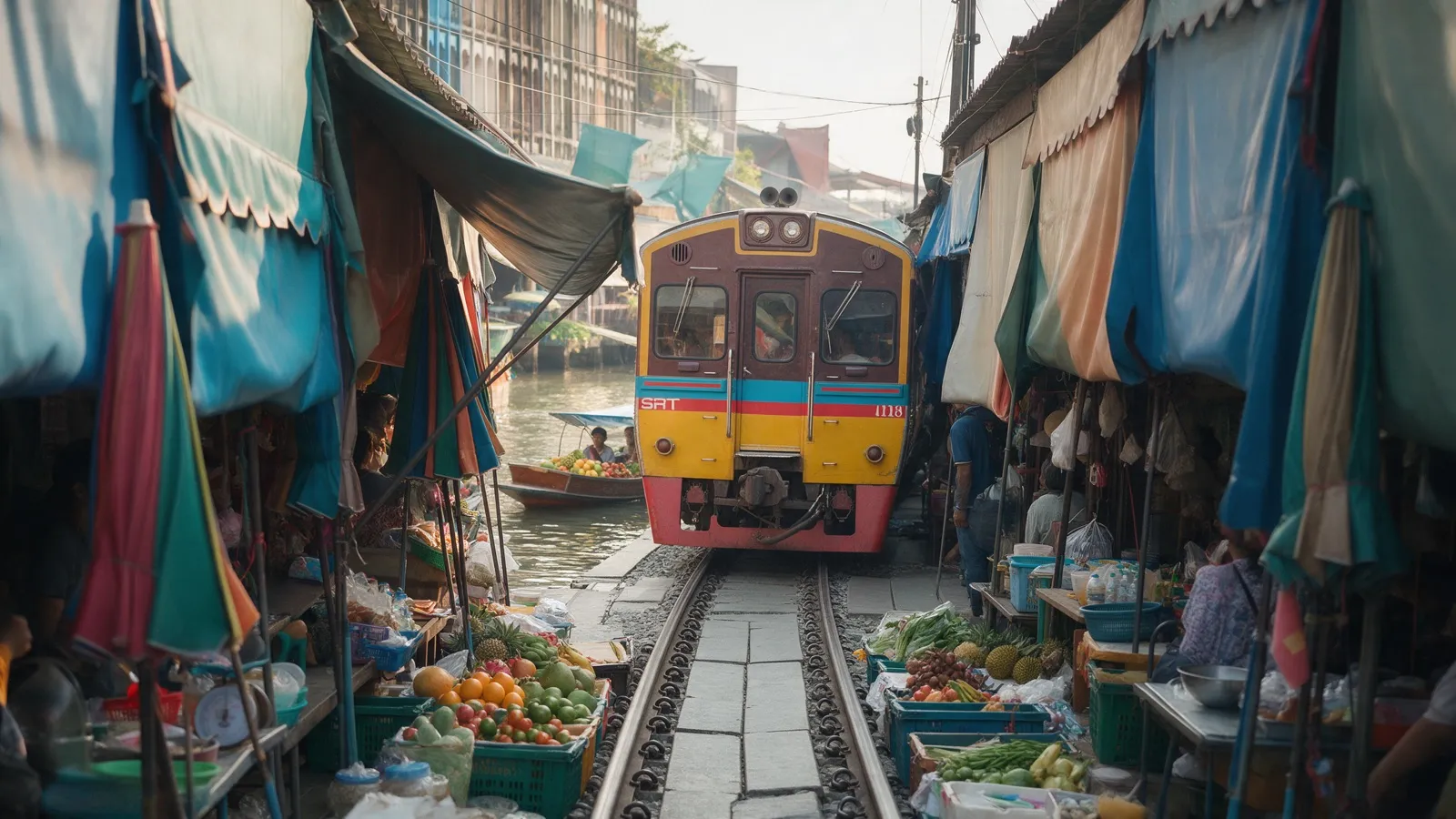
At the Maeklong Railway Market the train runs through the market stalls several times a day, and the vendors fold away their umbrellas just before it arrives. You reach the old royal city of Ayutthaya by train in just over an hour, and it is the most popular day trip.
Bangkok: floating market and railway market
A day trip from Bangkok to both markets, with a guide and a train ride through the market stalls.
- 8.5 hours
- Guide in English, audio guide also in German
- Free cancellation up to 24 hours in advance
from €16 per personAs of 21 October 2026
Check availabilityIf you want to see Muay Thai, go to Rajadamnern Stadium near the old town or to Lumpinee Stadium. Tickets start at about 1,000 baht.

Safari Park and Marine Park in Khlong Sam Wa are about 30 to 40 kilometres outside the city centre, open Tuesday to Friday from 9 am to 4 pm and at the weekend until 5 pm. For the whole park you should allow 5 to 6 hours. A combined ticket for both parks is available at Trip.com.
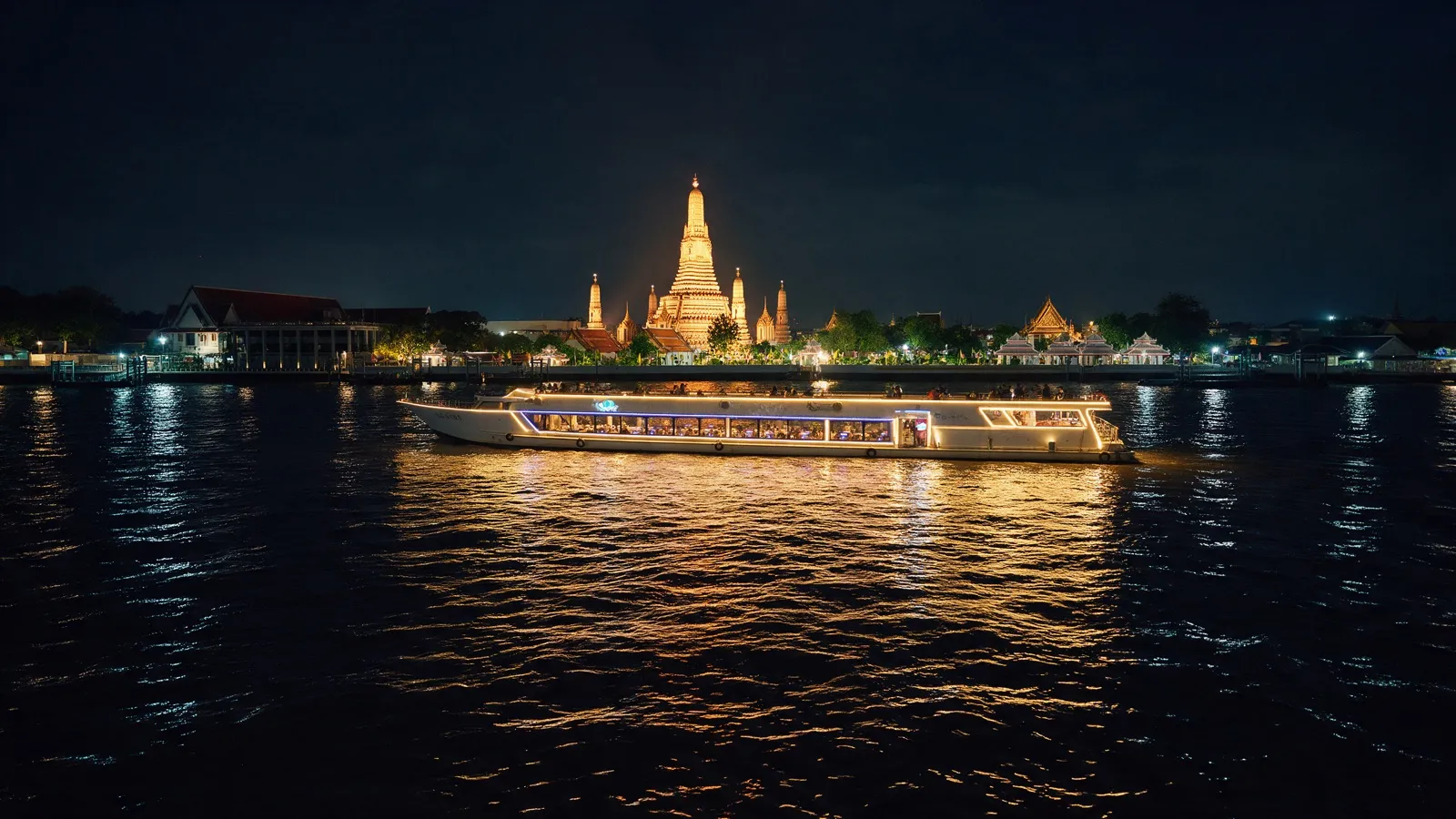
The dinner cruise on the Chao Phraya with a buffet and live music starts at the Asiatique pier and passes the lit-up temples. The route may change when water levels are high. Tickets are available in advance at Trip.com.
Tips for travellers over 50
Set off early and take a break at midday. You can easily manage the palace and temples in the morning, and in the midday heat the hotel is the better place. For markets and Chinatown, the evening is more pleasant anyway.
Between the big temples on the river, it is better to take the boat. That saves a lot of walking. Many streets in Bangkok have no pavements, which is another reason why train and boat are often the better choice.
Pack light long trousers or a knee-length skirt and a top with sleeves. Otherwise you will be turned away at the palace entrance.
Take only taxis or tuk-tuks that you have flagged down yourself, and do not go along with drivers who approach you.
From December to March the air in Bangkok is often heavily polluted with fine particulate matter. In January 2026 the city called on people to work from home and advised older people to stay indoors if possible, and everyone else to wear an N95 or FFP2 mask outdoors. During this period, check the air quality readings each morning.
Medical care is very good. Large private hospitals such as Bumrungrad on Sukhumvit and Bangkok Hospital have international departments.
Best time to visit
Bangkok is hot all year round. The average highs are above 30 °C in every month. December to February is the driest, it rains most in September and October, and March to May is especially hot. In autumn 2026 there was flooding in the Greater Bangkok area too. During the rainy season, check the current situation before boat trips. You can see all the monthly figures on the weather page for Bangkok.
What you need before you fly is covered in Entering Thailand in 2026. For a rough idea of what a day there costs, see Costs in Thailand per day.
Comparison
Not sure whether this place is the right one? Here are the differences side by side: