
North
Chiang Mai
Chiang Mai district by district: markets by weekday, khao soi, temples with admission, massage, elephants without riding, lantern festival and tips for the smoke season.
Updated: 19 October 2026
Region
North
Temples and mountains in the north
Best time to visit
November to February: dry, warm by day, cool at night. March and April are very hot, August and September are the wettest.
Getting there
Flight from Bangkok (Don Mueang) about 1 hr 10 to 1 hr 20 min, or by night train or bus
Top highlights
- Wat Phra Sing in the old town
- Wat Phra That Doi Suthep high above the city
- Doi Inthanon National Park with Thailand's highest peak
Rain and temperature through the year
- Jan4 mm, 30 °C, drynow
- Feb9 mm, 33 °C, drynow
- Mar18 mm, 35 °C, drynow
- Apr57 mm, 36 °C, drynow
- May162 mm, 34 °C, rainy seasonnow
- Jun124 mm, 33 °C, changeablenow
- Jul140 mm, 32 °C, changeablenow
- Aug217 mm, 32 °C, rainy seasonnow
- Sept211 mm, 32 °C, rainy seasonnow
- Oct118 mm, 31 °C, changeablenow
- Nov54 mm, 30 °C, drynow
- Dec16 mm, 29 °C, drynow
Line: average daily high in °C. Band and number: rain in mm per month · Weather data: Station Chiang Mai · Source: Thai Meteorological Department (TMD), Klimamittel 1981–2010, gerundet · Weather in Chiang Mai in detail
Contents of this article11 sections
Chiang Mai lies on the Ping River, surrounded by mountains. The Thais call the city the “Rose of the North”. King Mengrai founded it in 1296 as the capital of the Lanna kingdom, and many of the old temples in the northern Thai style are still standing. Chiang Mai is also the city of handicrafts, above all silk, silver and painted paper umbrellas. After a few days in Bangkok, it feels much calmer here.
The heart of the city is the old town inside a square moat. Around it lie districts with a character of their own: Nimman with its cafés, the bank of the Ping with old houses, the Night Bazaar with its evening market.
Getting there
Flying is the most comfortable way. Several airlines fly from Bangkok, and the flight from Don Mueang takes about 1 hour 10 to 1 hour 20 minutes. The airport is only a few kilometres south-west of the old town, and a taxi gets you there in 10 to 15 minutes. At the taxi counter you pay a fixed fare of 150 baht, and Grab and Bolt will also pick you up.
The nicer option is the night train. The state railway runs a direct service from Bangkok to Chiang Mai every day. Sleeper train no. 9 is popular: according to the timetable (as of December 2025) it leaves Krung Thep Aphiwat station at 6:40 pm and arrives the next morning at 7:15 am. Check the times with the state railway SRT before booking (hotline 1690). The train has a dining car and a car with a wheelchair lift and accessible toilets. Tickets are available up to 180 days in advance on D-Ticket, the state railway’s official booking site. The route is in high demand, so book early.
Buses run daily from the Northern Bus Terminal in Bangkok. The journey usually takes around 10 hours.
On the night train the lower berths are a little wider and have a window. In the upper berth you are closer to the light and the air conditioning.
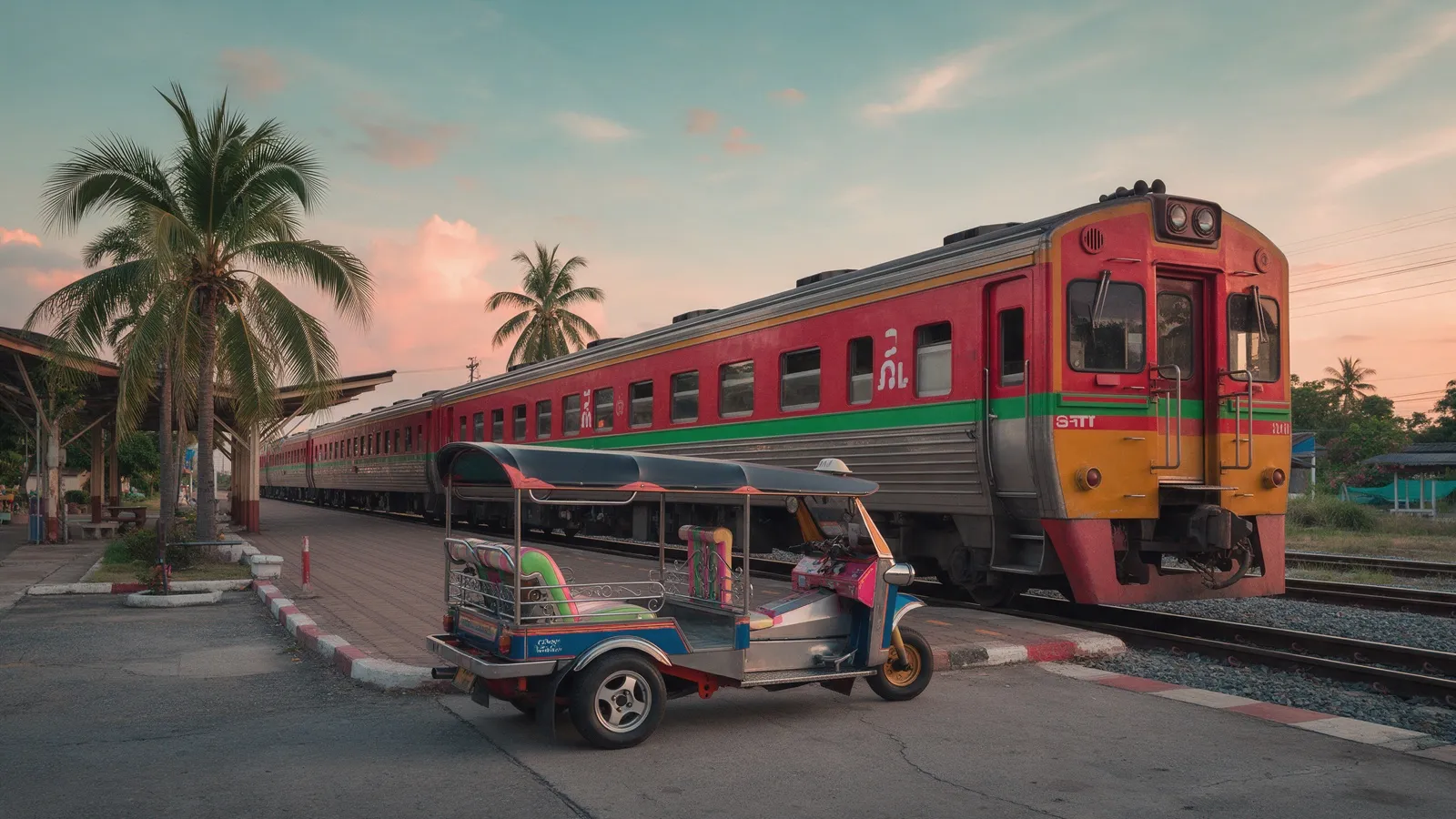
For many people the night train to Chiang Mai is part of the experience: board in the evening, arrive in the north the next morning. You can compare connections, times and tickets for your date in advance.
Getting around the city
In Chiang Mai, red songthaews, pick-ups with two bench seats, run without a fixed route. You flag one down, say where you are going, and the driver tells you whether he can take you. A shared ride in the city costs about 30 to 40 baht per person (as of September 2026). Agree the price before you get in. Grab and Bolt are more convenient if you are out late or have an unusual destination. The old town itself is flat and easy to explore on foot.
The districts
Old town
Inside the old moat stand many temples, including Wat Phra Sing and Wat Chedi Luang. The buildings are low, and from here you can reach a lot on foot. For most sightseeing this is the best base, and many guests are young backpackers. The moat is a good six kilometres long, and walking the whole circuit takes just under two hours.
Nimman
Nimmanhaemin in the west is the modern district with many cafés, restaurants, bars and shopping centres. The crowd is younger, the buildings are denser, and it gets busy in the evening.
By the river
On the east bank of the Ping around Wat Ket temple lies an old, quieter district with wooden houses and lovely restaurants on the water. Accommodation here is a little more upmarket. For travellers who like to eat well in the evening and go to bed early, this is my choice.
Night Bazaar
Between the old town and the river lies the Night Bazaar, open every evening from about 5 pm to midnight. Around it there are hotels, markets and restaurants. Handy if you like a stroll in the evening, but it is not quiet.
Which district suits you
For a first visit with lots of temples, stay in the old town. If you like cafés and modern life, stay in Nimman. It is quieter and more refined by the river. If you need quiet at night, ask for a room facing the garden rather than the street when you book.
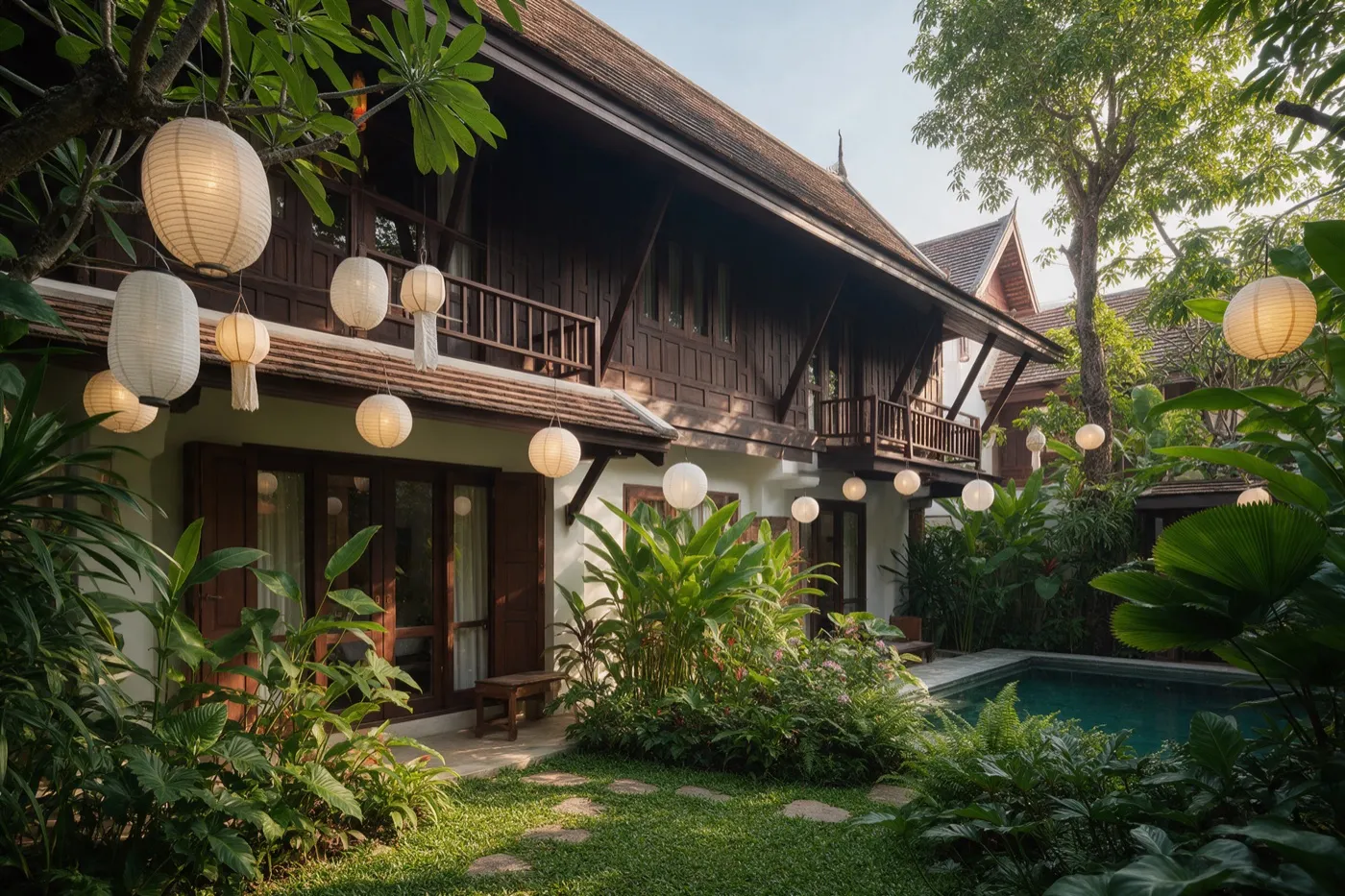
The old town suits a first visit best, Nimman suits cafés and modern life, and the river suits those after peace. If you need quiet at night, ask for a garden-facing room when you book. You can compare hotels in Chiang Mai by district and price in advance.
Markets by weekday
Chiang Mai has a market every day (as of 2026):
- Sunday: Walking Street on Ratchadamnoen Road from Tha Phae Gate, from the afternoon until about 11 pm, the biggest market in the city
- Saturday: Walking Street on Wua Lai Road in the silver district, smaller and more local
- Saturday and Sunday mornings: Jing Jai market with organic vegetables, handicrafts and breakfast
- Daily: the Night Bazaar in the evening, Warorot Market during the day and the market at the south gate, Chiang Mai Gate, with food stalls until midnight
The best time to visit the Sunday market is between 5:30 pm and 7 pm; before 6 pm it is not yet so crowded.
Food
Chiang Mai’s signature dish is khao soi, a curry noodle soup with coconut milk and both soft and crispy noodles. In 2026 the city has 18 restaurants with a Michelin Guide Bib Gourmand award, which stands for good food at fair prices.
At the Chang Phueak night market in front of the north gate, a plate costs 40 to 100 baht. The stall selling braised pork knuckle on rice is well known.
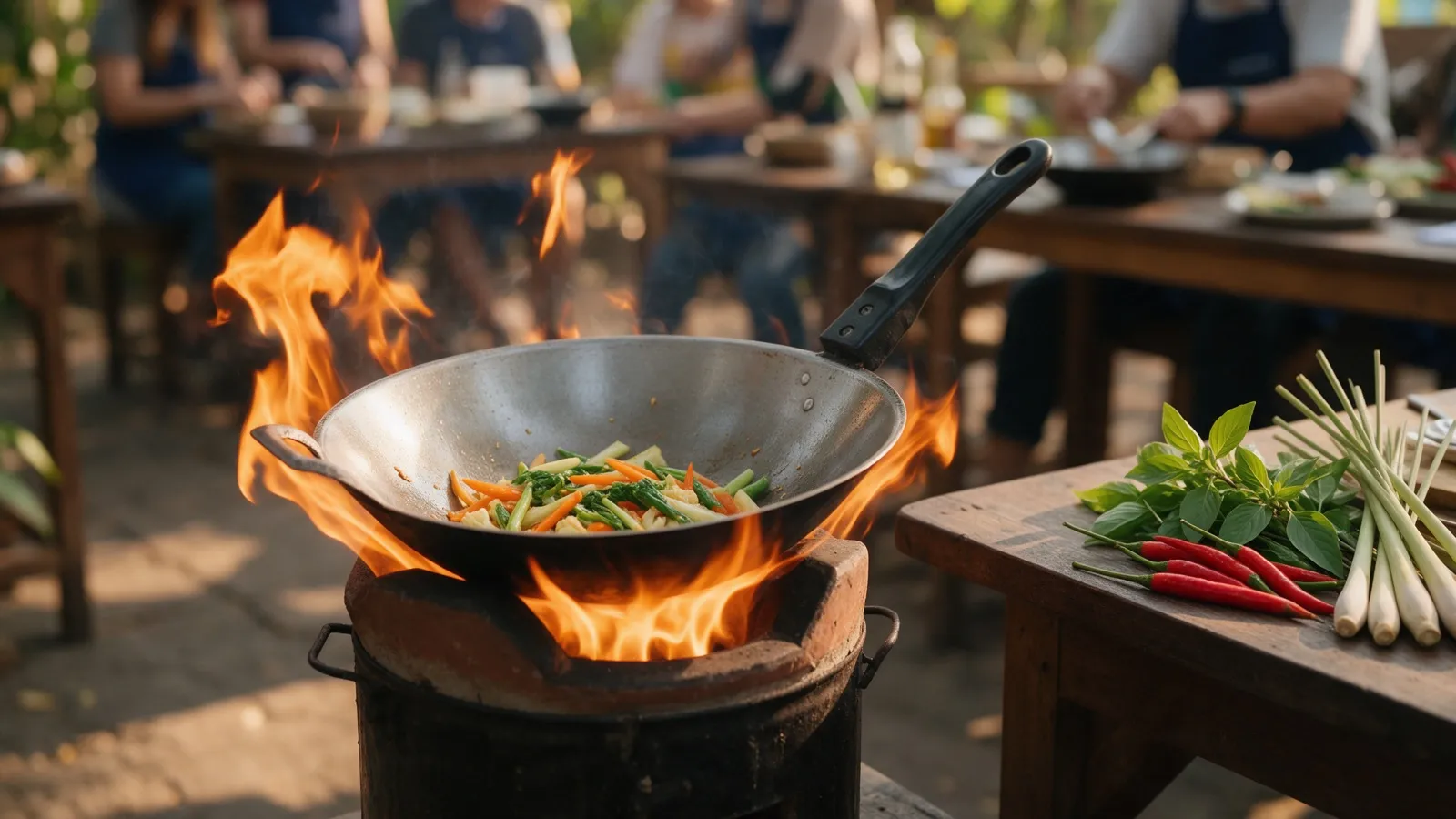
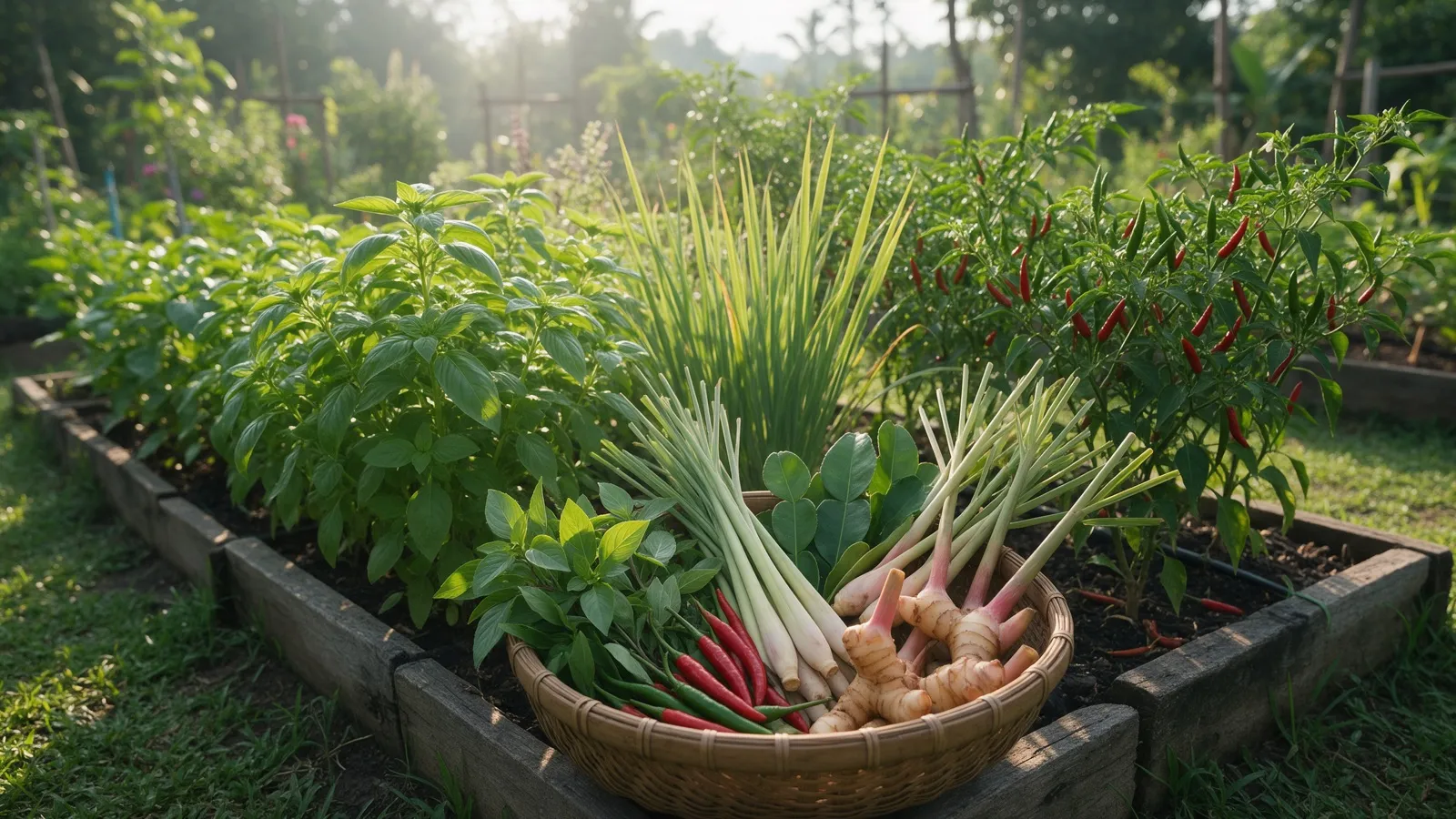
Chiang Mai: cooking class, market and tour of a Thai herb garden
Half a day in Chiang Mai with a market visit, a walk through a herb garden and a cooking class.
- 3.5 hours
- Instructor in English
- Free cancellation up to 24 hours in advance
from €26 per personAs of 21 October 2026
 Check availability
In the evening
Chiang Mai is a city for quiet evenings. There are bars and live music but hardly any clubs, and most places close at midnight or 1 am. The North Gate Jazz Co-Op at the north gate is popular, with live music and free entry; arrive half an hour before the main set. By the river there are restaurants with live bands, such as the Riverside, which has been around since 1984. Nimman and the area around Tha Phae Gate are loud and young. Beer bars line Loi Kroh Road.
Massage
One special place is the massage centre at the women’s prison. The massages are given by women doing vocational training in the prison. One hour costs 250 baht; there are no appointments, you take a number and wait. Former inmates work at Lila Thai Massage, from 400 baht per hour, daily from 10 am to 10 pm.
Temples and excursions
Wat Phra Sing
The temple complex dates from 1345. The revered Buddha statue Phra Phutthasihing stands here, and every year at the Thai New Year festival Songkran everything revolves around it. Also take a look at the Lai Kham Chapel with its wood carvings and murals.
Wat Chedi Luang and Wat Suan Dok
Wat Chedi Luang in the middle of the old town is known for its huge, partly collapsed chedi. Wat Suan Dok from the 14th century is known for its white chedis. They hold the ashes of the former royal family of Chiang Mai. Wat Chedi Luang costs about 40 baht admission. For the temples of the old town, it is best to go before 10 am or from 3 pm, when it is cooler.
Wat Phra That Doi Suthep
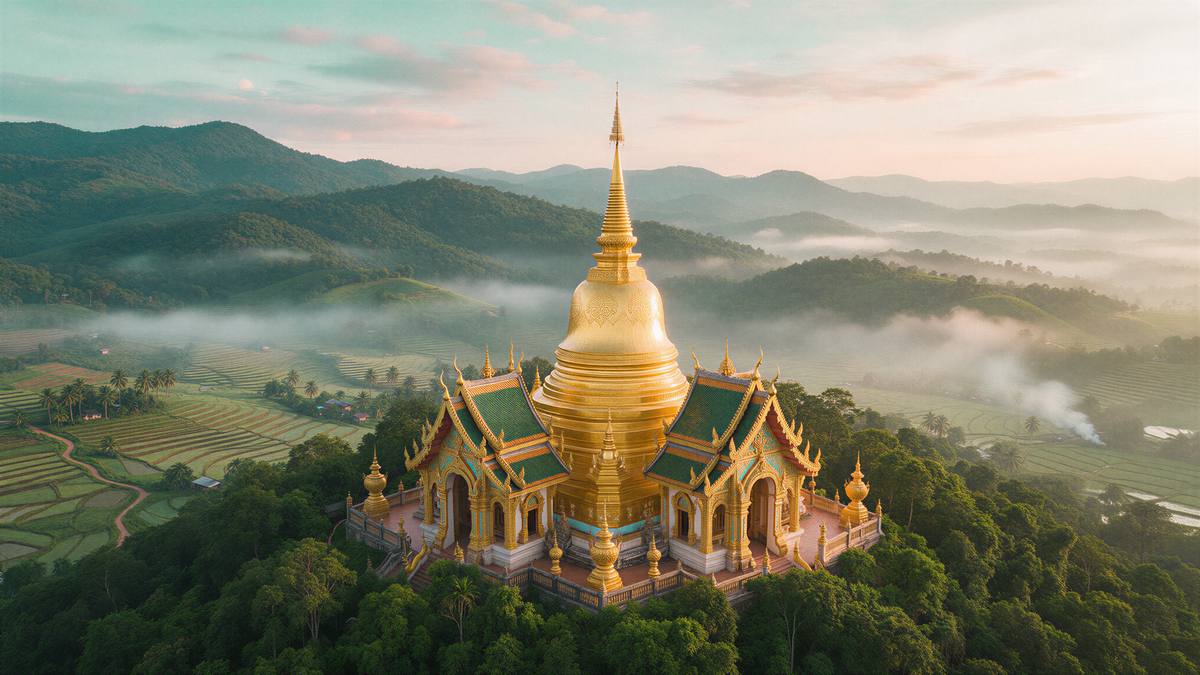
The temple stands at the top of Doi Suthep mountain, and from there you can see far across the city. To reach the golden chedi you climb a long naga staircase with around 300 steps. Alongside it runs a small cable car for 20 to 50 baht; prices vary. Admission costs 30 baht (as of September 2026). It is at its best early in the morning: between 6 and 8 am it is cool and empty.
Doi Inthanon National Park
This is home to Doi Inthanon, at 2,565 metres the highest mountain in Thailand. In the park there are waterfalls, hiking trails, Hmong and Karen villages and two pagodas for the king and queen with flower gardens around them. The park costs 300 baht for foreigners, and at the top it is 10 to 15 degrees cooler than in the city. It makes a long day trip with an early start.
Elephants without riding
If you want to experience elephants without riding them, go to the Elephant Nature Park. Half a day costs 2,500 baht. Animal welfare campaigners currently do not list the park among elephant-friendly places, because the elephants are hand-fed fruit there. How to recognise a good camp is covered in the guide Ethical elephant camps in Thailand.

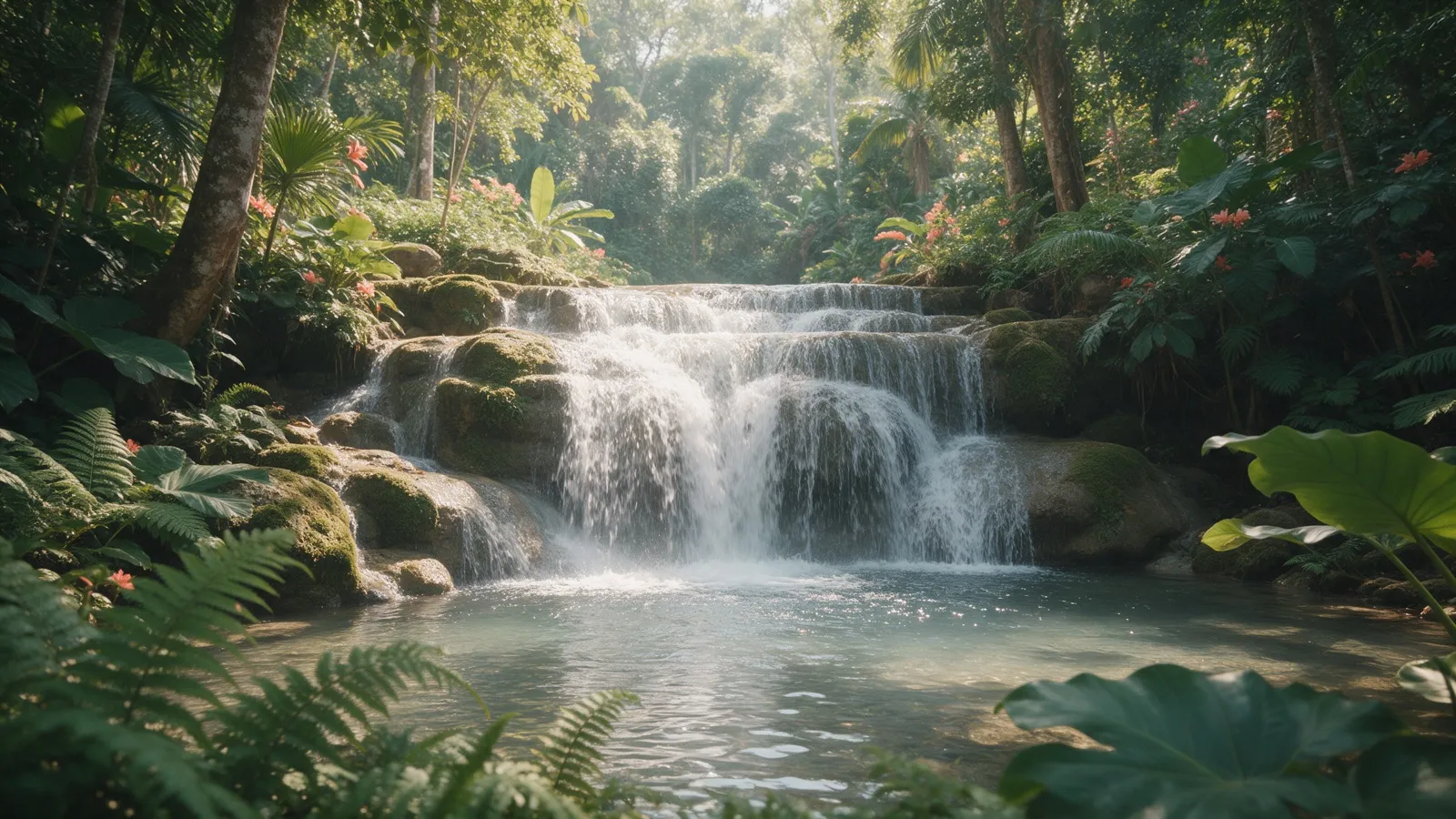
Chiang Mai: ethical elephant sanctuary and waterfall group tour
A group tour to an elephant sanctuary without riding, plus a waterfall.
- 7 hours
- Guide in English
- Free cancellation up to 24 hours in advance
from €42 per personAs of 21 October 2026
Check availabilityHandicrafts
In the village of Bo Sang near Chiang Mai, the well-known paper umbrellas are still painted by hand today.
Yi Peng lantern festival
In November Chiang Mai celebrates Yi Peng and Loy Krathong. In 2026 the days fall on 24 and 25 November. Then lantern boats float on the Ping, and lanterns hang everywhere. Watching by the river costs nothing. Hotels book up early for these days.
Tips for travellers aged 50 and over
Bring a jacket for the evening. In January the average low is around 15 °C, and up on Doi Suthep it is cooler still.
If the steps to Doi Suthep are too much for you, take the cable car. In the temple, shoulders and knees must be covered.
Keep an eye on air quality. Particulate pollution in Chiang Mai has risen sharply. The smoke builds up from January and is at its worst in March and early April. In spring 2026 Chiang Mai repeatedly ranked first worldwide among the cities with the worst air. If you have problems with your airways or heart, it is better to come between November and January and talk to your doctor before the trip.
For emergencies there are good private hospitals. Bangkok Hospital Chiang Mai and Chiang Mai Ram have an international department and an emergency room open around the clock.
Prepare treks carefully and ideally go in a group with an experienced guide.
With the sleeper train you save a night in a hotel. Whether you sleep well on a train depends on the person, though. If you are unsure, it is better to fly.
Best time to visit
From November to February it hardly rains in the north, it is warm by day and cool at night. In March and April it gets very hot at 35 to 37 °C by day, and most of the rain falls in August and September. You can see all the monthly values on the weather page for Chiang Mai.
What you need before you fly is covered in Entering Thailand in 2026. What a day there roughly costs is covered in Costs in Thailand per day.
Comparison
Not sure whether this place is the right one? Here are the differences side by side: