
Guide
Health in Thailand: Vaccinations, Travel First-Aid Kit, Dengue and Smoke Season
Which vaccinations make sense for Thailand, where malaria and dengue matter, what belongs in your travel first-aid kit and when the north has smoke in the air.
- Category: Health
- 9 min read
- Updated:22 October 202622/10/2026
Contents of this article8 sections
You do not need any vaccination to enter Thailand from Germany. It is still worth taking a look before you fly, above all because of mosquito protection, hygiene and the question of whether you want to be vaccinated against dengue or rabies. Here is what travel doctors and the authorities recommend.
In short
- No vaccination is required for direct entry from Germany. Hepatitis A is recommended. Further vaccinations depend on the length and style of your trip.
- Dengue occurs across the whole country, including in the cities. The most important protection is mosquito protection, during the day as well.
- The malaria risk is low, but Phuket and Samui are classified differently by different sources.
- Clean water, washed hands and freshly cooked food prevent most stomach and bowel problems.
- In the north, smoke is often in the air during the dry season, especially in March.
Vaccinations: what is required and what makes sense
None is required if you enter directly from Germany. Only people coming from a yellow fever area, or who spent more than twelve hours in transit there, need proof of a yellow fever vaccination.
Hepatitis A is recommended for all travellers (as of July 2026). For travellers at increased risk, these are added: chikungunya, dengue, hepatitis B, Japanese encephalitis, rabies and typhoid. Japanese encephalitis occurs nationwide and all year round, peaking from May to October and especially in the north. For rabies there is a moderate risk from dogs, and for typhoid a documented risk from imported, highly resistant pathogens.
If you stay longer or travel rough, with a tent and a backpack, also think about hepatitis B, rabies, Japanese encephalitis and typhoid. From the age of 60, add the pneumococcal vaccination and, depending on the season, the flu vaccination.
Above all, you should check your standard vaccinations against the vaccination schedule of the STIKO (Germany’s Standing Committee on Vaccination). These include tetanus, diphtheria, whooping cough, polio and measles. You should check your measles protection in particular.
Here is the overview at a glance:
Mosquitoes
Protection by day and at nightFood and water
Hygiene decidesAnimals
Keep your distance from dogsClose contact
Blood, skin, casual encountersBasic protection and age
Vaccination schedule and over 60Sources: STIKO and DTG (July 2026), German Federal Foreign Office, ADAC. Which vaccination suits you is something to clarify in a travel medicine consultation.
Plan the consultation early. See a doctor who knows travel or tropical medicine four to six weeks before departure. This matters especially when travelling with children, during pregnancy or with pre-existing conditions. Because some vaccinations can be expensive, you should check with your health insurer beforehand what it covers.
Dengue and mosquitoes
You can catch dengue anywhere in Thailand, including in the big cities, and all year round. The disease is caused by a virus and brings high fever, severe headache, aching limbs and a rash. Rare severe cases can be life-threatening and mostly affect children. The mosquitoes also bite during the day. So mosquito protection is not only for the evening.
Protect yourself consistently by day and by night: use mosquito repellent, cover your skin and use bed nets at night. The same goes for chikungunya, Zika and Japanese encephalitis.
On dengue vaccination, the experts do not agree. The vaccine Qdenga is approved in the EU for people aged four and over. In its travel vaccination recommendations of July 2026, the STIKO recommends it for people aged four and over who have already had a laboratory-confirmed dengue infection and are travelling at increased risk, for example on a longer stay. The series of two vaccinations at least three months apart should be completed before departure. For people without a previous infection, the STIKO currently makes no general vaccination recommendation because of the limited data. The Deutsche Fachgesellschaft für Reisemedizin (German Society for Travel Medicine) has disagreed since April 2026: travellers without a previous infection should no longer be excluded as a matter of principle when the risk is high, and a single dose offers interim protection of around 81 per cent. Discuss it with your doctor. I cannot decide it for you.
Malaria: low, but not the same everywhere
The risk of catching malaria in Thailand is low all year round. It is medium on the island of Little Koh Chang in the Andaman Sea and along the border with Myanmar. The cities of Bangkok, Chiang Mai, Chiang Rai and Pattaya are malaria-free.
For Phuket and Koh Samui the classifications differ: the Auswärtiges Amt (German Federal Foreign Office) lists them under “low risk”, while the ADAC (German automobile club, which publishes travel health information) calls them malaria-free. For a beach holiday, mosquito protection is therefore usually enough. If you travel to a medium-risk area that is more than 48 hours from the nearest medical facility with malaria testing, you should talk to a doctor about standby emergency treatment for malaria (SBET).
Food, drink, water
Travellers’ diarrhoea is common. The cause is usually poor hygiene with drinking water, food and hands. Illnesses spread this way include hepatitis A and E, shigellosis and typhoid.
These rules help in practice:
- Drink only water from sealed bottles with an unbroken seal.
- Wash your hands often with soap.
- Choose dishes that are freshly cooked and hot, for example at street stalls straight from the oil or broth, rather than salad, ice cream or mayonnaise.
- Peel fruit yourself with clean hands.
Treat even small wounds immediately. The risk of wound infections is high in countries like Thailand. Disinfecting and covering them is therefore basic care. There is also melioidosis, a bacterial infection transmitted through skin injuries and soil or water. If you develop matching symptoms, tell the doctor about your trip to Thailand.
Animals, water and sea
Rabies in Thailand is transmitted mainly by dogs. Avoid contact with animals and see a doctor immediately after a bite. Rabies vaccine and immunoglobulin may be unavailable or only available in limited supply in the country. That is a reason to seriously consider the vaccination before the trip if you are travelling for a long time or visiting remote areas.
Venomous snakes occur across the country, including in cities, especially in the rainy season. You should avoid standing or slow-flowing water, because it can be contaminated with rodent urine (leptospirosis).
In the sea most jellyfish are harmless, but venomous species such as the box jellyfish and the Portuguese man o’ war have been sighted repeatedly, especially in the rainy season from May to October. Contact with a box jellyfish can lead to fatal cardiovascular failure. Read the warning signs on the beach and ask locally. It is better to avoid beaches used by animals, because animal faeces can cause parasitic skin diseases.
If you want to dive, get a diving medical consultation and check-up before the trip.
Sun, air and smoke season
The sun in Thailand is easy to underestimate. It can damage skin and eyes in the short and the long term. The SunSmart app tells you how much protection you need. By the way, marine national parks have rules on sun cream; see the guide What is banned in Thailand.
Air pollution has increased sharply in recent years in Bangkok and Chiang Mai. In the dry season from November to April, fires can also bring more smoke and dust in the countryside. The main season in the north runs from February into April, with the worst smoke usually in March. You can check air quality with the World Air Quality Index or Air4Thai.
When planning: if you want to go to the north from February to April, you should allow spare days or switch to the coast. More on the best time to travel is in the guide Best time to visit Thailand, and the page on Chiang Mai gives the months for the city.
Travel first-aid kit and medication
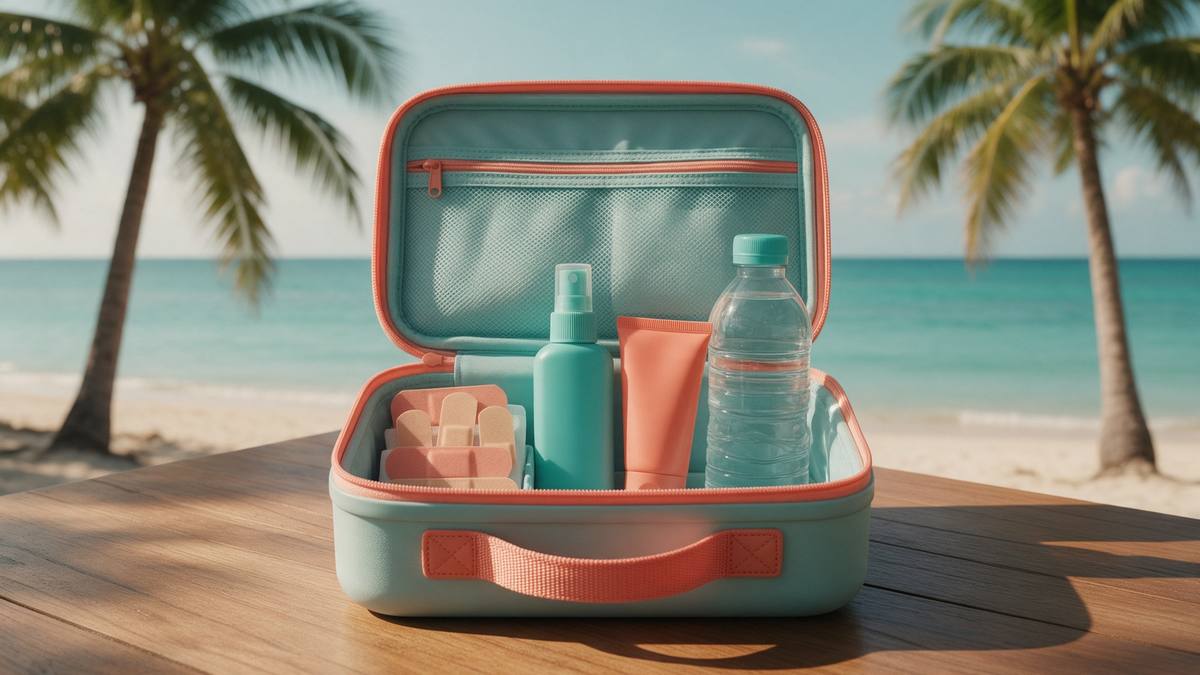
Pack your own travel first-aid kit. The basic kit includes: wound disinfectant spray, plasters and dressing material, as well as remedies for pain, fever, insect bites, travel sickness, diarrhoea, vomiting, constipation and colds. You should take twice the amount of any medication you take regularly and split it between hand luggage and checked luggage.
If you need long-term medication, get a doctor’s certificate in English confirming that it is necessary. For narcotics and some psychotropic substances, the Thai Food and Drug Administration (Thai FDA) also requires a permit, at least 15 days before the trip. The details are in the guide What is banned in Thailand.
Frequently asked questions
Do I need vaccinations for Thailand?
None is required if you enter directly from Germany. Hepatitis A is recommended. Depending on the length and style of your trip, hepatitis B, typhoid, rabies and Japanese encephalitis may be worth considering. Get travel-medicine advice four to six weeks before departure.
Do I need malaria prophylaxis?
For standard trips in cities and on beaches, usually not. The risk is low all year round. A medium risk applies to the border with Myanmar and the island of Little Koh Chang. If you are going there, talk to a doctor beforehand.
Can I drink tap water in Thailand?
Drink only from industrially sealed bottles with an unbroken seal.
How do I protect myself against dengue?
Above all with mosquito protection by day and by night: repellent, covering clothing, a bed net. A vaccination is approved for people aged four and over. The STIKO currently recommends it only after a previous infection, while the Fachgesellschaft für Reisemedizin takes a broader view. Your doctor decides with you.
When is the smoke season in the north?
The dry season lasts from November to April, the main season is between February and April, with the worst smoke usually in March. Check current air quality before you book.