
Guide
Thailand with Children: Best Time to Travel, Beaches, Health and Documents
Plan Thailand with children: shallow beaches, protection from mosquitoes and sun, vaccinations, documents and the child seat rule in cars.
- Category: Daily life
- 10 min read
- Updated:22 October 202622/10/2026
Contents of this article6 sections
Thailand with children works well if you plan a few things differently from a holiday for two. You do not need a dream beach; you need shallow water, shade and short distances. And you choose the time of year so that heat, rain and smoke do not dictate the day.
In short
- Plan fewer stops with longer stays. With children, every change of place quickly costs half a day to a whole day.
- Family beaches are shallow, sheltered and close to town. On our destination pages, Choeng Mon on Samui, Klong Dao on Lanta, Kata on Phuket and White Sand Beach in Khao Lak are at the top.
- Use mosquito protection during the day too, because severe cases of dengue mostly affect children.
- A child under six must use a child seat in a private car and in a rental car.
- A child passport is accepted. Minors travelling alone need a consent declaration.
The best time to travel with children
The calmest time for most places is November to February. After that it gets hot. In Bangkok it is very hot from March to May, in the north there is often smoke in the air in March and April, and on the Andaman Sea it rains a lot from May to October. Then there is the sun: it can damage skin and eyes in the short and long term, and this is even more true for children’s skin.
For a beach holiday, families are therefore best off with December to March on the Andaman Sea or February to September on the Gulf of Thailand. Which months suit which place is shown on the weather page. The guide Best time to visit Thailand explains how it all fits together.
Documents and entry
For German citizens, the child passport and the provisional passport also count as travel documents. An identity card and a provisional identity card are not enough. The passport must still be valid for at least six months on entry.
On entry you may be asked about cash: 20,000 baht per person, 40,000 baht for a family, also in euros or US dollars in cash. You fill in the Thailand Digital Arrival Card online before arrival. How to do this for the whole family in one go is explained in the guide THIM app. You will find more about entry in the guide Entering Thailand.
If a minor travels alone, they need an official consent declaration from the legal guardians. A template is available for this.
Beaches that work with children
We have marked on the destination pages which beaches suit families:
- Koh Samui, Choeng Mon: sheltered by two small islands offshore, with shallow, calm water. For many it is the best family beach on the island. In high season parking gets tight.
- Koh Lanta, Klong Dao: about three kilometres long, shallow and calm, close to the pier in Saladan. At low tide the water retreats.
- Phuket, Kata and Kamala: Kata is small and popular with families, Kamala is quiet in the main season. In the rainy season there are currents at the southern end of Kata.
- Khao Lak, White Sand Beach and Coconut Beach: fine sand and a shallow entry, good for families.
- Koh Tao, Aow Leuk: ideal for families and beginner snorkellers, knee-deep for a long way out. The last stretch of the way down is a steep gravel track, which is no good with a pushchair.
- Koh Kood, Bang Bao: a sheltered bay, good for families.
Not every beach is suitable. Karon on Phuket, for example, is long, and in the monsoon the red flag often flies there. Always pay attention to the flags and warning signs.
Most jellyfish in the sea are harmless. However, venomous species such as the box jellyfish and the Portuguese man o’ war have been sighted repeatedly, mainly in the rainy season from May to October. Contact with a box jellyfish can lead to fatal cardiovascular failure. Ask locally about current sightings before children go into the water.
Health with children
When travelling with children, arrange a travel medicine consultation early, about four to six weeks before departure. This also applies to the vaccination schedule: routine vaccinations should be up to date, especially measles protection.
Dengue is somewhat more complicated. Rare severe cases mainly affect children. The mosquitoes also bite in the daytime. The vaccine Qdenga is approved in the EU from the age of four. In its travel vaccination recommendations of July 2026, the STIKO recommends it only for people who have already had a confirmed dengue infection. For everyone else there is currently no general recommendation. The Deutsche Fachgesellschaft für Reisemedizin has taken a broader view since April 2026. Discuss this with your paediatrician. More on this in the guide Health in Thailand.
A few rules help in everyday life:
- Mosquito protection, clothing that covers the skin and a bed net, day and night.
- Drink only from sealed bottles with an intact safety ring.
- Wash hands often with soap, eat food hot and fresh rather than cold, peel fruit yourself.
- Disinfect small wounds immediately. The risk of infection is high in Thailand.
- Keep away from dogs and other animals. Because of rabies, after a bite go to a doctor immediately. Explain this to the children before the trip.
Your travel medical kit should contain remedies for pain and fever, for diarrhoea and vomiting, plasters and wound disinfectant. For children, ask beforehand about the right dosage. The private clinics in the big cities and holiday resorts work to Western European standards, while care in rural areas is not always as good. Travel health insurance is a must, see Travel health insurance for Thailand. Family policies are available from around 30 euros a year (as of 1 July 2026).
Getting around with children
After the amendment of the Land Traffic Act, which the police reminded people of in August 2023, the following applies: children under six must sit in a child seat or on a booster seat in private cars, pick-ups and minivans. Anyone over six but shorter than 135 centimetres must wear a seat belt or use a special seat. Drivers without a seat face a fine of up to 2,000 baht. The rule does not apply to buses and public vans.
So when you rent a car, book the child seat at the same time. And because 70 per cent of road victims are on two-wheelers, I would not rent a scooter with small children. That is my own assessment, not a regulation.
On ferries and excursion boats, pay attention to safety and rescue equipment. With children, that means checking child-sized life jackets before departure. How best to link the routes is explained in the guide Getting around Thailand.
National park admission: on our pages, Khao Sok and Koh Lipe each list 200 baht for adults and 100 baht for children aged 3 to 14 (as of June 2026). Prices change, so ask at the entrance.
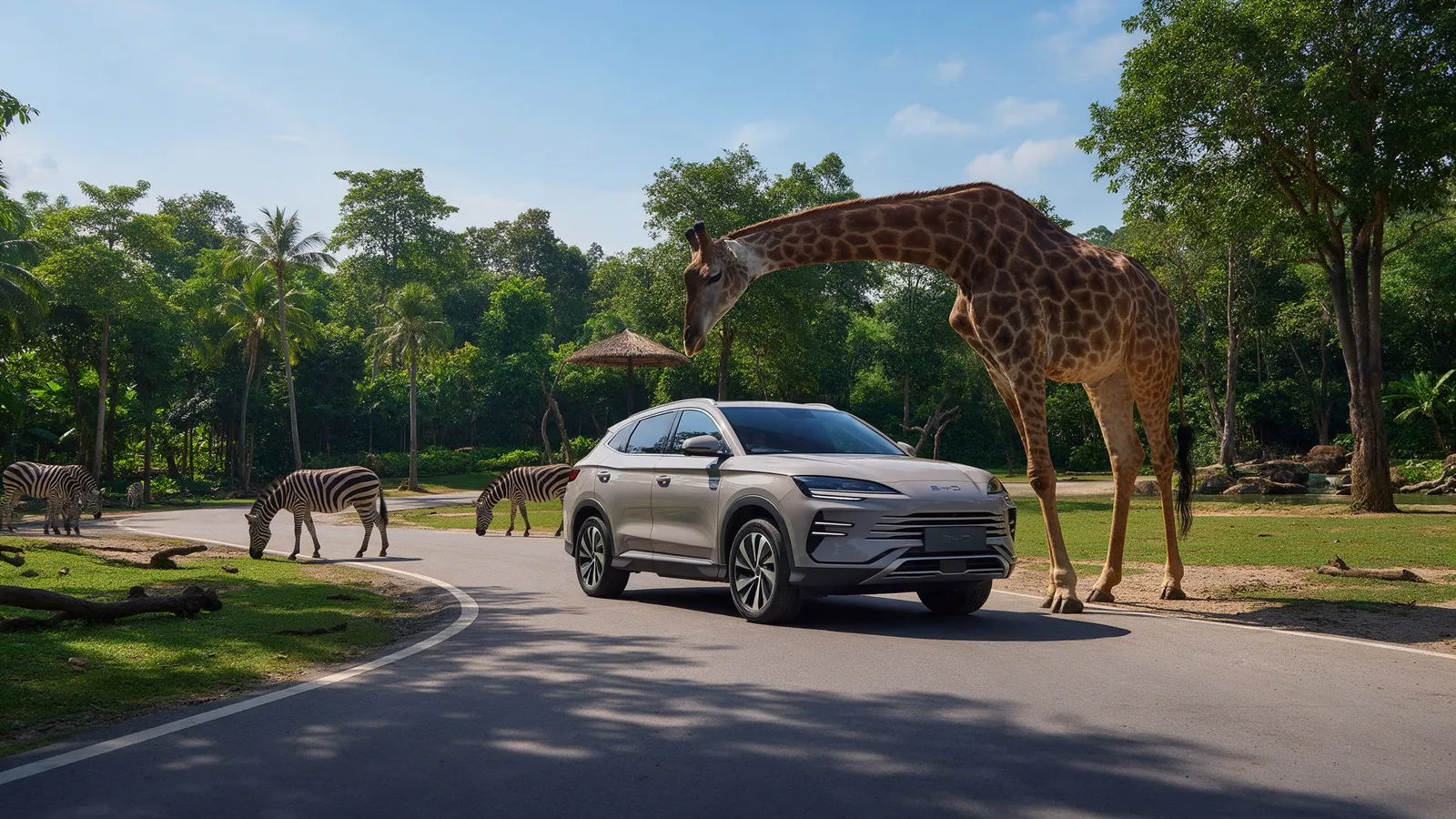
Safari Park and Marine Park in Khlong Sam Wa are about 30 to 40 kilometres outside the city centre. They are open Tuesday to Friday from 9 am to 4 pm and at weekends until 5 pm. You should allow 5 to 6 hours for the whole park. A combination ticket for both parks is available at Trip.com.

The dinosaur show at Asiatique is open daily from 11 am to 10 pm, with last entry at 9 pm, and the tour takes about 45 to 60 minutes. The ticket is cheaper during the day than in the evening. Dates can be changed up to 24 hours beforehand, but there are no refunds.
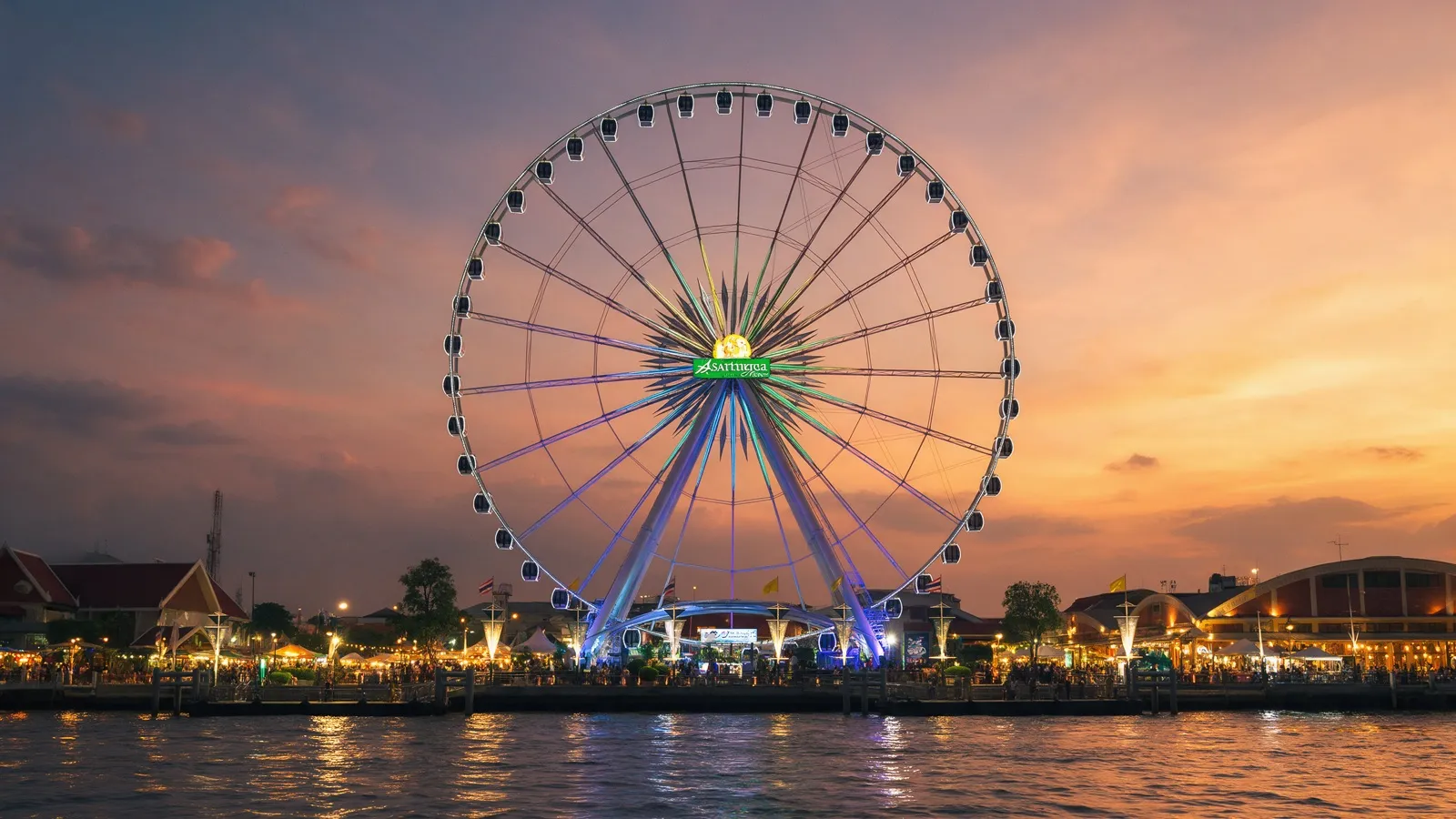
Skyflyers at Asiatique is a ride more than 100 metres above the Chao Phraya, for visitors 120 cm tall or more. It is open until 10 pm, and the start is at 11 am or 1 pm depending on the provider. Check the cancellation terms before buying; the time slots and height requirements are listed at Trip.com.
Frequently asked questions
Is Thailand doable with babies and toddlers?
Yes, but quiet beach destinations with short distances are easier than multi-stop trips with many changes of place. Talk to your paediatrician before departure about vaccinations and mosquito protection.
Do children need their own passport?
Yes. An identity card is not enough. The child passport is accepted. The passport must still be valid for at least six months on entry.
Which beaches are suitable for children?
Shallow, sheltered beaches such as Choeng Mon on Samui, Klong Dao on Lanta, Kata on Phuket or White Sand Beach in Khao Lak. Ask locally about currents and pay attention to the flags.
Does my child have to sit in a child seat in Thailand?
In private cars, pick-ups and minivans, yes, if they are under six years old. Anyone shorter than 135 centimetres must wear a seat belt or use a special seat. The rule does not apply to buses and public vans.
Which vaccinations should children have?
The routine vaccinations according to the STIKO schedule, especially against measles. Hepatitis A is recommended for Thailand. Your paediatrician or doctor decides with you about further vaccinations such as dengue.