
Central
Kanchanaburi
Kanchanaburi from Bangkok: train and bus, where to stay, Saturday markets, Bridge on the River Kwai, Hellfire Pass, Erawan with admission and tips on heat and floods.
Updated: 19 October 2026
Region
Central
Bridge on the River Kwai and waterfalls
Best time to visit
November to February is the most pleasant. March to May gets very hot, and September and October are the wettest.
Getting there
Two local trains daily from Bangkok Thonburi, 100 baht; at weekends an excursion train from Hualamphong
Top highlights
- Bridge on the River Kwai, still used by trains today
- Kanchanaburi War Cemetery
- Train ride over the Wampo Viaduct to Nam Tok
Rain and temperature through the year
- Jan3 mm, 33 °C, drynow
- Feb18 mm, 36 °C, drynow
- Mar29 mm, 37 °C, drynow
- Apr78 mm, 38 °C, changeablenow
- May145 mm, 36 °C, changeablenow
- Jun86 mm, 34 °C, changeablenow
- Jul103 mm, 34 °C, changeablenow
- Aug98 mm, 34 °C, changeablenow
- Sept220 mm, 34 °C, rainy seasonnow
- Oct209 mm, 32 °C, rainy seasonnow
- Nov59 mm, 32 °C, drynow
- Dec6 mm, 31 °C, drynow
Line: average daily high in °C. Band and number: rain in mm per month · Weather data: Station Kanchanaburi · Source: Thai Meteorological Department (TMD), Klimamittel 1981–2010, gerundet · Weather in Kanchanaburi in detail
Contents of this article7 sections
Kanchanaburi lies about 100 kilometres north-west of Bangkok, where the Kwai Noi and Kwai Yai rivers meet. The town is known for the Bridge on the River Kwai and the railway that prisoners of war and forced labourers built under Japanese occupation in the Second World War. So many people died building it that it went down in history as the “Death Railway”. Museums and cemeteries commemorate it. All around there are mountains, reservoirs, waterfalls and national parks. From Bangkok it works as a day trip, but two or three days are better.
The town lies on the river, with the bridge a little to the north. The big sights such as Hellfire Pass, Erawan and the railway line to Nam Tok are further out in the west of the province.
Getting there
The train is the best way to go, because the line is itself part of the old railway. Two local trains run daily from Thonburi station on the west side of the river in Bangkok, one at 7:45 am and one in the early afternoon. You reach Thonburi in about nine minutes on foot from Bang Khun Non MRT station (Blue Line).
The fare is 100 baht. The trains have 3rd class only and no dining car, but vendors sell drinks and fruit. You do not need a reservation. The trains stop in Kanchanaburi, shortly after that at River Kwae Bridge station in front of the bridge, and then continue to Nam Tok.
On Saturdays, Sundays and public holidays an excursion train also leaves Bangkok Hualamphong at 6:30 am. It stops on the way at Nakhon Pathom and at the bridge, runs to Nam Tok and on the way back stops for an hour at the war cemetery in Kanchanaburi. The return trip costs 120 baht without air conditioning or 240 baht in 2nd class with air conditioning. For this train you need a reservation, for example through D-Ticket, the state railway’s booking site. It is often fully booked, so book early. I would check the exact times with the state railway SRT before you travel (hotline 1690).
Buses from Bangkok to Kanchanaburi also run daily, and many operators offer guided day trips. The buses leave from the Southern Bus Terminal in Bangkok, and the journey takes about two hours. Minivans also run from Mo Chit.
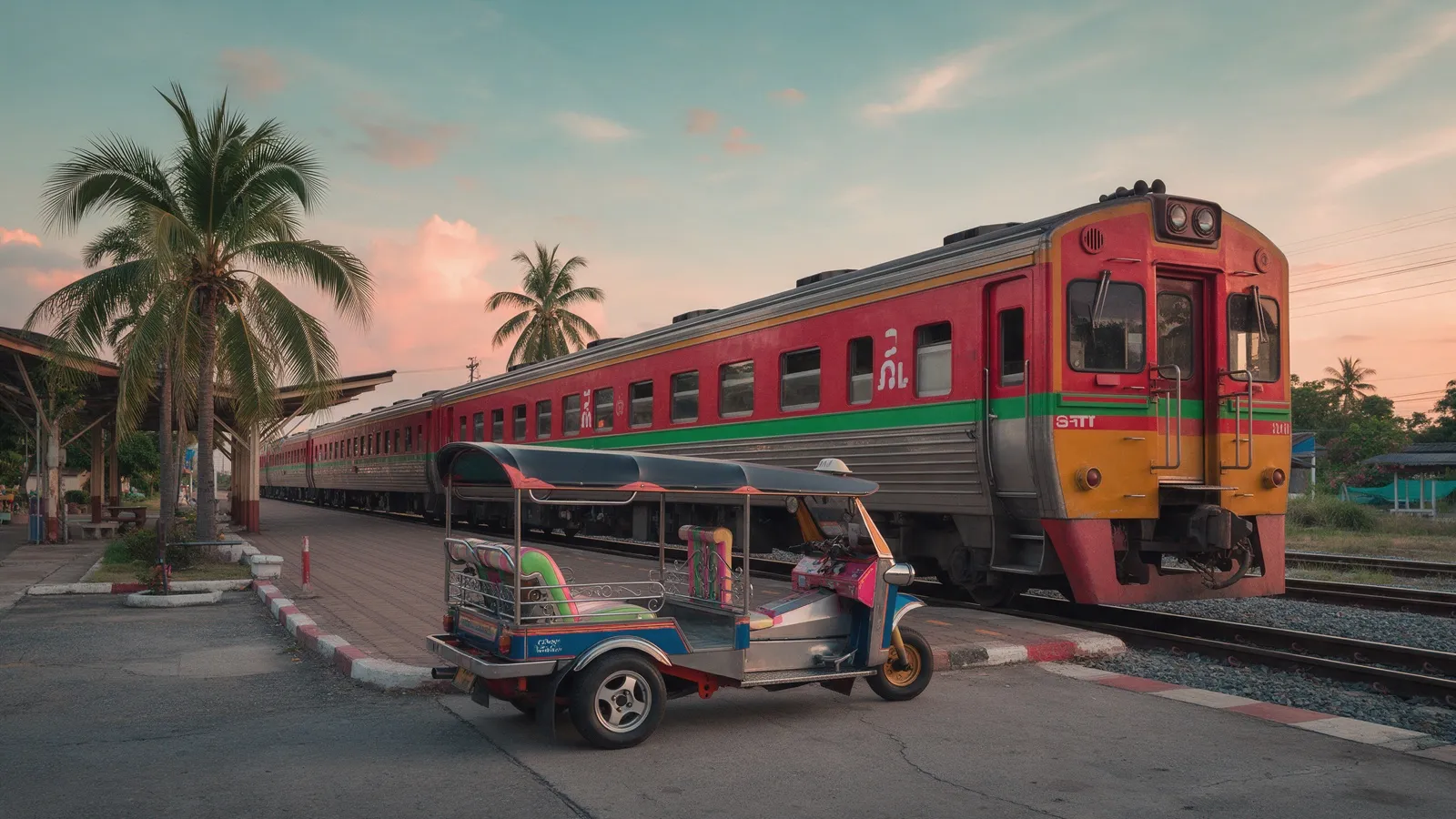
The train is the best way to go, because the line belongs to the old railway and is part of the trip itself. You can compare connections from Bangkok and tickets for your date in advance.
Getting around
In town you get around by tuk-tuk, songthaew or cycle rickshaw. There are no meters, so agree the price beforehand. Ride-hailing apps exist, but with very few drivers. Often the driver from your accommodation is quicker. For Hellfire Pass and Erawan it is best to hire a driver for the day or a tour. A bus to Erawan National Park also leaves from the bus station in Kanchanaburi, taking about an hour and a half.
Where to stay
Most hotels are in the town of Kanchanaburi. The bridge is about 5 kilometres from the centre. There are also many small boutique hotels and guesthouses. Maenam Kwae Road on the river is the street with many guesthouses, restaurants and bars, and it is liveliest there in the evening.
The raft houses, floating accommodation on the river, are something special. They are rustic. If comfort matters to you, ask in detail about the bed, bathroom and air conditioning beforehand. The well-known Jungle Rafts further upriver in Sai Yok National Park can only be reached by boat, and there is no electricity and no air conditioning. In the hot season this is only for the hardy. When using boats, look out for safety and rescue equipment.
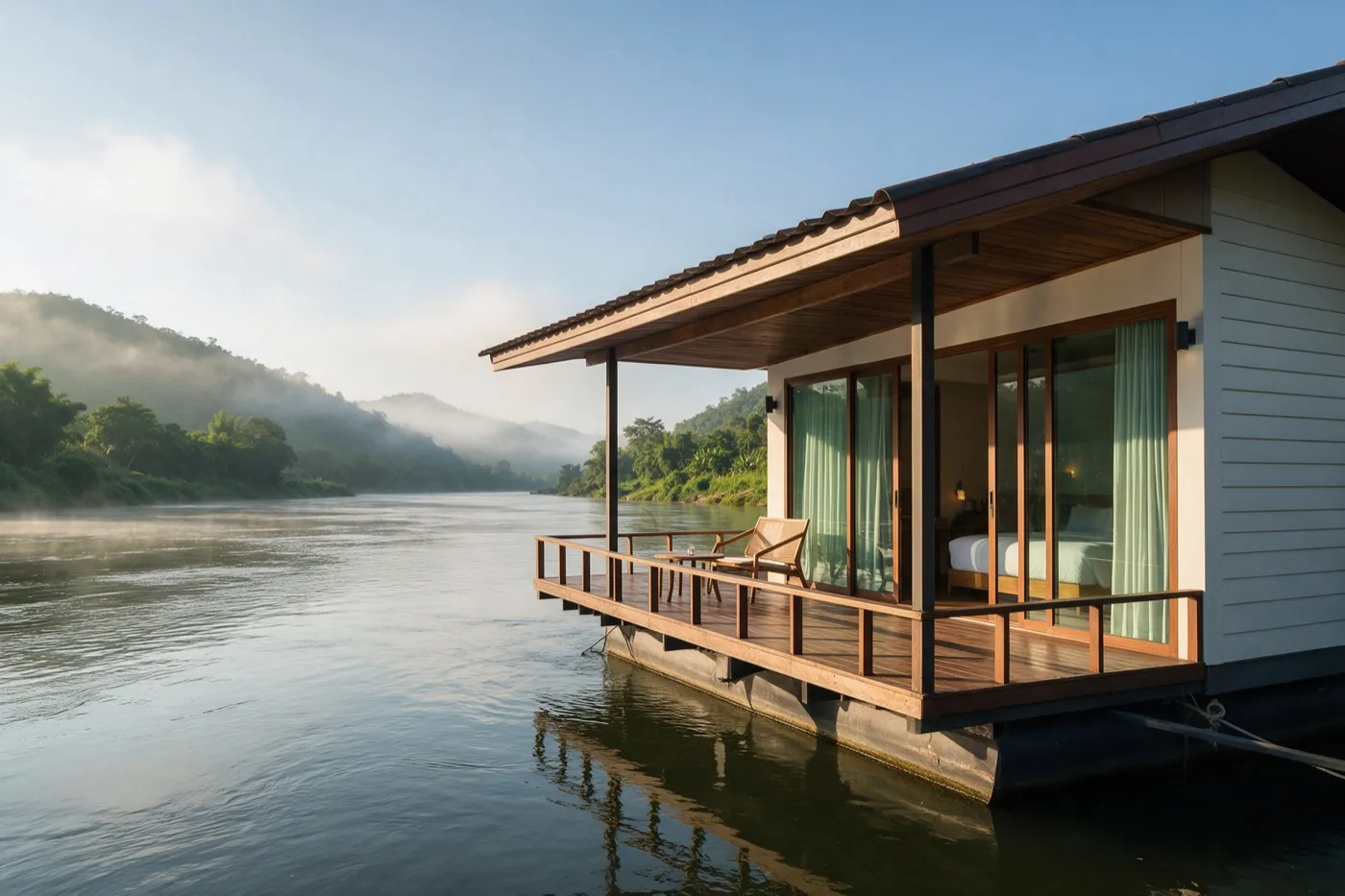
For the town and the surrounding area there are hotels in all price ranges, plus the raft houses on the river. Ask in detail about the bed, bathroom and air conditioning beforehand. You can compare accommodation in and around Kanchanaburi in advance.
Evenings and markets
Kanchanaburi is quiet in the evening. On Maenam Kwae Road there are relaxed bars with live music and restaurants on the river. A night market is open every evening at the station, from about 6 pm. On Saturdays there are several walking streets: on the river at the Sky Walk (about 5 pm to 9:30 pm) and in the old town of Pak Phraek (about 4 pm to 9 pm), plus the Tha Ruea market on Fridays and Saturdays.
Food is cheap here. A simple dish at the market costs 20 to 60 baht and a noodle soup about 40 to 50 baht (as of 2026). In the restaurants on Maenam Kwae Road you pay 60 to 150 baht per dish.
Highlights
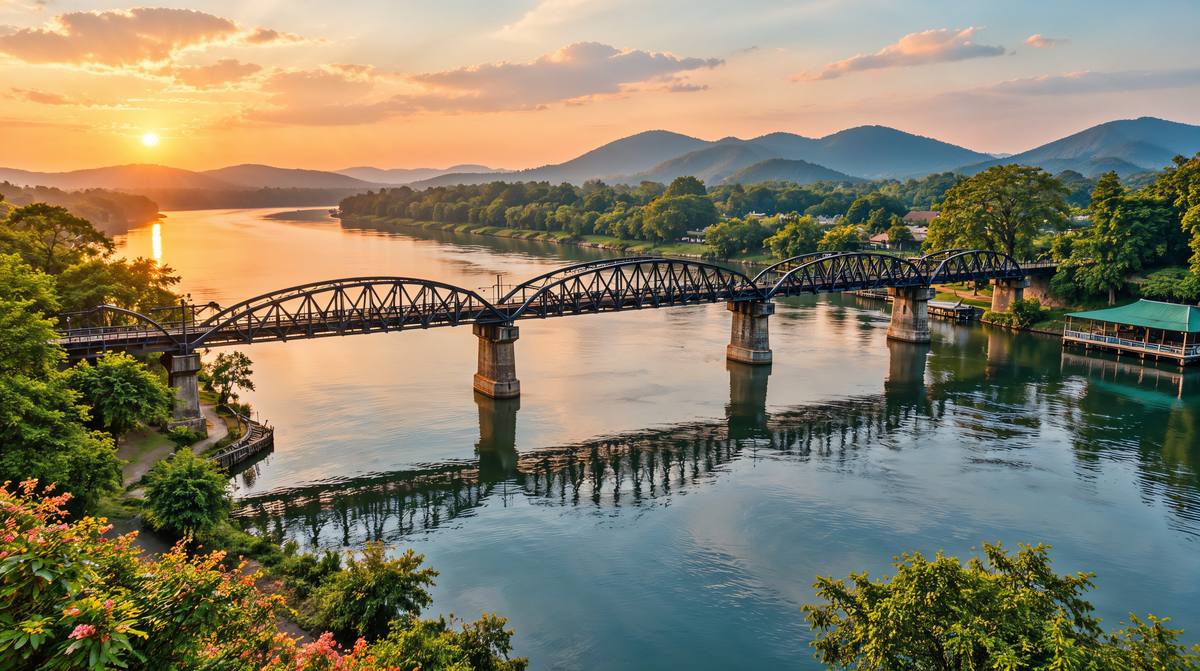
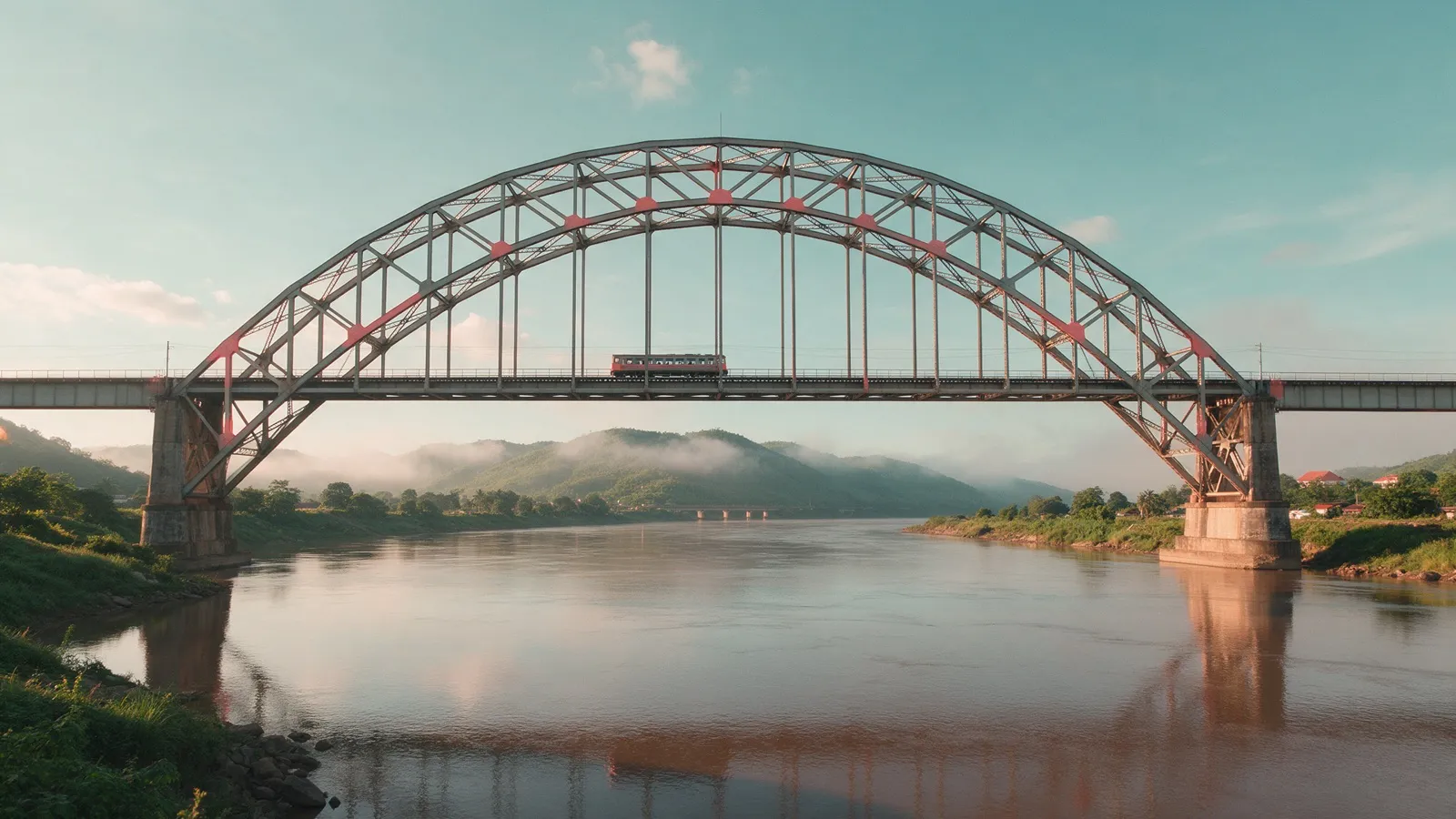
Bridge on the River Kwai: The bridge over the Kwai Yai was built in 1942 and 1943 by Allied prisoners of war as forced labour. It was destroyed in the war and afterwards rebuilt on the same spot. The curved steel arches are original from 1943, and the two straight sections replace parts of the bridge that were destroyed by bombs in 1945. You are allowed to walk across the wooden planks. The bridge is still used by trains today, though, and then you have to step aside. I would see the bridge for what it is: a memorial to the people who died here.
Kanchanaburi War Cemetery: About 13,000 prisoners of war died building the railway. Construction began in June 1942, and by December 1943 the 424-kilometre line was in operation. The cemetery holds 6,982 war dead, from Britain, Australia and the Netherlands among others. In addition, around 80,000 labourers from Asian countries died. Take your time and keep quiet.
JEATH War Museum: The name stands for the initial letters of Japan, England, America, Australia, Thailand and Holland. The museum is modelled on a prisoners’ bamboo hut and shows daily life in the camp with pictures, photos and newspaper reports.
By train to Nam Tok: Beyond the bridge the train runs along the Kwai Noi river and then very slowly over the Wampo Viaduct. This is a wooden trestle right against the rock face, also built by prisoners of war. The end of the line is Nam Tok. The journey costs 100 baht each way.
Hellfire Pass: About 80 kilometres beyond Kanchanaburi, this rock cutting lies on the disused section of the railway. Australia has set up a memorial there with a museum and a memorial trail. It is open daily from 9 am to 4 pm. It is closed for three weeks every year in May (2027: 3 to 23 May) and on a few public holidays, including Songkran (13 to 15 April), 5 December and 24 to 27 December. Admission is free, and for the audio guide you leave a deposit. The short path to the memorial leads down a flight of steps, and you need about 40 to 45 minutes there and back. For visitors who find walking difficult, a golf cart is available at certain times.
Thailand-Burma Railway Centre: Right next to the war cemetery, this museum explains the building of the railway with maps, models and finds. It is open daily from 9 am to 4 pm. I would visit it before the cemetery, as you will understand more.
Erawan National Park: The Erawan Waterfall has seven tiers and is among the best known in Thailand. A trail leads along the waterfall up to the seventh tier. The waterfalls are most beautiful from May to December. Admission is 300 baht for foreigners, and it is best to bring cash. It is open daily from 8 am to 4:30 pm, with last entry at 3:30 pm. The first two tiers are easy to reach, and there are benches and toilets there. There are paths up to the sixth tier, and you reach the seventh only by climbing. Many fish swim in the pools. It is crowded at weekends, so come on a weekday and early.
Elephants: At Elephants World the elephants are not ridden, and visitors feed and bathe them. Half a day costs 1,800 baht. Hands-on feeding and bathing are seen as a warning sign by animal welfare groups, though. There is more on this in the guide Ethical elephant camps in Thailand.
Festival of lights at the bridge: At the end of November and the beginning of December there is a light and sound show with fireworks at the bridge every year. In 2025 it ran from 27 November to 7 December. I would check the dates for 2026 shortly beforehand.
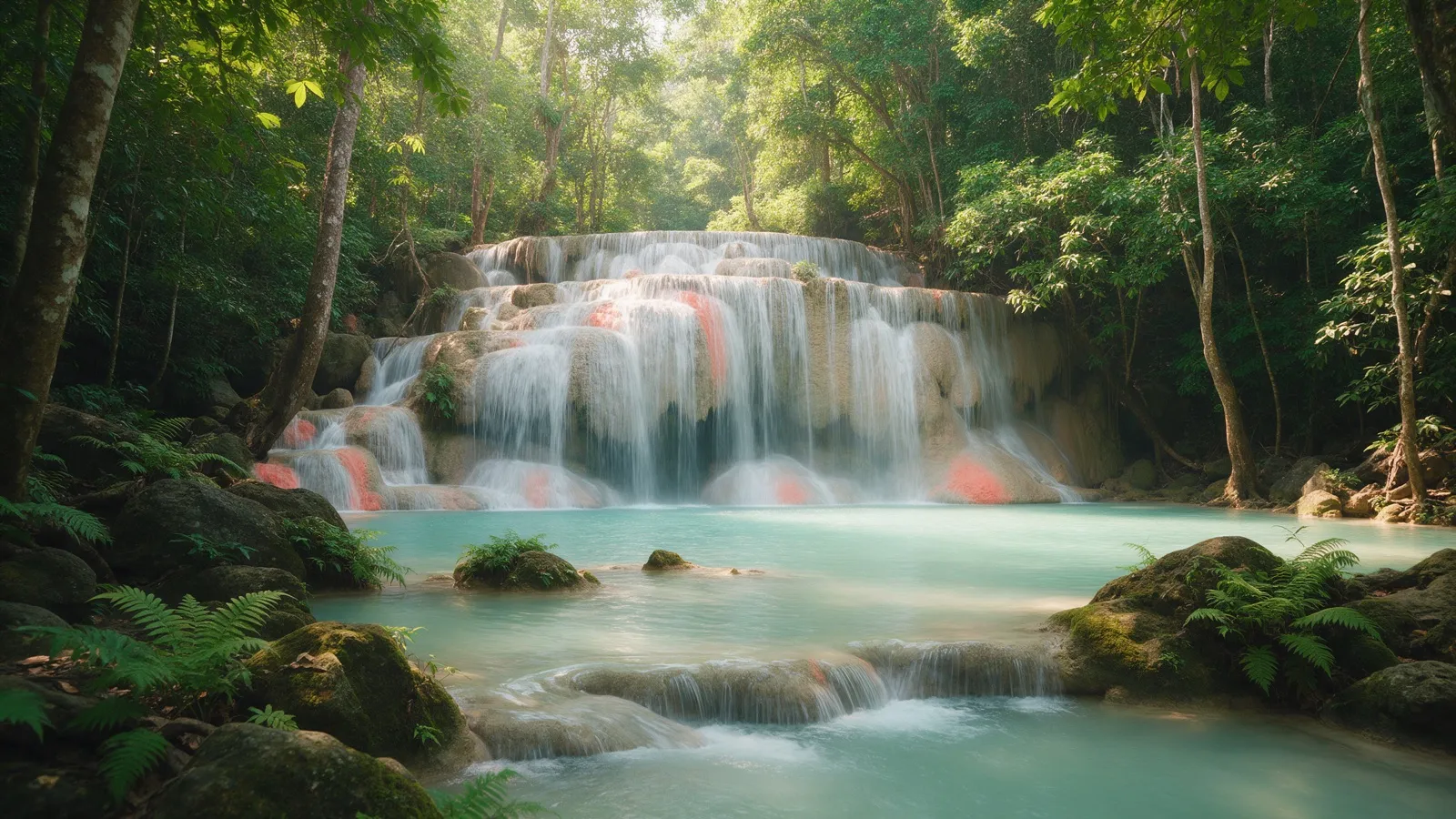
From Bangkok: Erawan park and Kanchanaburi small-group tour
Small-group tour from Bangkok to the Bridge on the River Kwai and the waterfalls in Erawan National Park.
- 12 to 14 hours
- Guide in English and Spanish
- Free cancellation up to 24 hours in advance
from €48 per personAs of 21 October 2026
 Check availability

From Bangkok: Death Railway and Hellfire Pass tour with lunch
Day trip from Bangkok to the Death Railway and Hellfire Pass, with lunch.
- Full day
- Guide in English
- Free cancellation up to 24 hours in advance
from €70 per personAs of 21 October 2026
Check availabilityTips for travellers over 50
For a day trip from Bangkok the journey is long. One day is enough for the bridge and perhaps the cemetery. If you also want to see Hellfire Pass and the train ride to Nam Tok, you are better off staying one or two nights. That way you do not have to squeeze everything into the hot hours.
It is about 5 kilometres between the town and the bridge. On foot that is too far in the heat. It is best to take a cycle rickshaw, and a tuk-tuk works just as well. Agree the price before the ride.
On the bridge you walk over wooden planks. Watch the ground and step aside in good time when a train comes. The trains run there at 10 km/h at most and sound their horns loudly.
At Hellfire Pass you need sturdy shoes, protective clothing and enough drinking water. Allow enough time to be back before dark. There are toilets at the end of the trail. How far you go is up to you. Even the museum and the first section give a good impression.
The war cemetery, the museums and the bridge are places of mourning. Modest clothing is appropriate there, and photos with gravestones as a backdrop are out of place. In temples, make sure your shoulders are covered and you wear long trousers or skirts.
For emergencies there is a private hospital in town with an emergency room open around the clock. From Erawan, Hellfire Pass or Sangkhlaburi, though, the way there is long.
At the end of September and the beginning of October 2026 there was severe flooding in the province, and in the middle of October two people died in the floodwater in Nong Prue district. The excursion trains were cancelled on the weekend of 3 and 4 October, and the Sai Yok Noi waterfall was temporarily closed on 27 September. Before you travel, check whether trains and sights are running normally again. If you want to stay overnight on a raft, ask especially carefully when there is flooding.
Best time to visit
According to the long-term data from the Kanchanaburi weather station, it is most pleasant from November to February, particularly hot from March to May, and it rains most in September and October. The waterfalls are most beautiful from May to December. You can see all the monthly values on the weather page for Kanchanaburi.
What you need before your flight is covered in Entry to Thailand 2026. For a rough idea of what a day there costs, see Costs in Thailand per day.
Comparison
Not sure whether this place is the right one? Here are the differences side by side: