
Guide
Natural Hazards in Thailand: Currents, Jellyfish, Monkeys, Dogs, Waterfalls
What turns dangerous in the sea, at waterfalls and on land: currents, box jellyfish, monkeys, dogs and rabies, plus first aid and emergency number 1669.
- Category: Health
- 14 min read
- Updated:31 October 202631/10/2026
Contents of this article10 sections
- Currents: Why Beach Holidaymakers Most Often Get Into Trouble
- Jellyfish: Box Jellyfish, Stings and First Aid
- Sea Urchins, Coral and Stonefish
- Monkeys: Hands Off, Bag Closed
- Dogs and Rabies
- Waterfalls and Rivers in the Rainy Season
- Snakes, Scorpions and Wild Elephants
- Sunscreen: A Ban Applies in Marine Parks
- The Beach Bag for Thailand
- Frequently Asked Questions
Thailand is safe for most holidaymakers. Danger rarely comes from large predators. It usually comes from things that look harmless: a current on a beautiful beach, a jellyfish you cannot see, a monkey that grabs for your bag, a waterfall after rain. Below you will find where the risk lies and what to do if something does happen.
In short
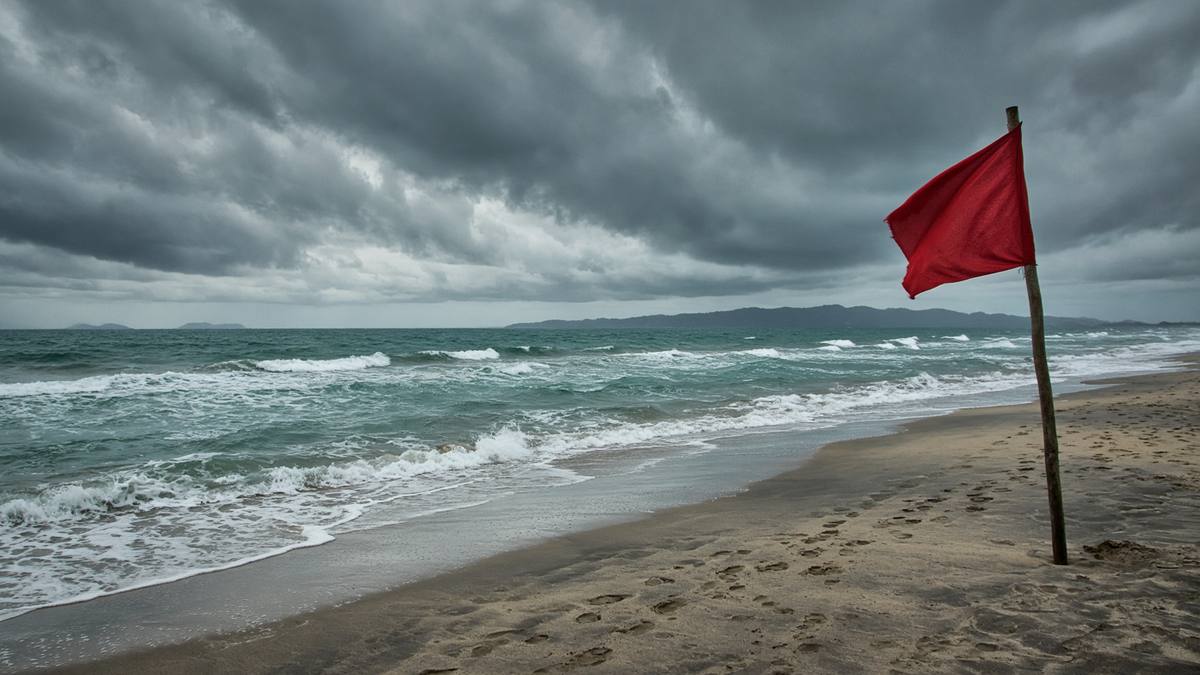
- The most common danger in the sea is the current, not sharks or jellyfish. A red flag means: do not go into the water, not even up to your knees.
- Box jellyfish live in the Gulf of Thailand and in the Andaman Sea. After a sting: get out of the water, call 1669, pour vinegar over the spot for at least 30 seconds, do not rub.
- After any bite or scratch from a dog, cat or monkey: wash the wound for at least 15 minutes with soap and water and see a doctor the same day. Rabies is a real issue in Thailand.
- After heavy rain, and when dead jellyfish are lying on the beach, stay out of the water. Waterfalls can swell within minutes, even when the sun is shining where you are.
- Emergency numbers: 1669 ambulance, 191 police, 1155 tourist police.
Currents: Why Beach Holidaymakers Most Often Get Into Trouble
A current does not pull you under, it carries you away from the shore. It becomes dangerous because swimmers panic, fight against it and go under from exhaustion. It can form on a beach that looked calm an hour earlier.
When it is critical. The monsoon is what matters. On the Andaman coast, with Phuket, Khao Lak, Krabi and Koh Lanta, the southwest monsoon runs roughly from May to October. High waves and strong rip currents then build up on the west-facing beaches. On Koh Samui and in the southeast, the rain usually falls between November and March. In June 2024, three people drowned within a few days off Mai Khao and Surin beaches on Phuket, and in May 2026 a man was dragged out to sea off Naithon at low tide.
The flags. When they are flying, follow them strictly:
- Red: do not swim
- Yellow: swimming with caution is allowed
- Green: calm conditions
- Red and yellow: lifeguards are on duty, swim in this section
- Black and white chequered: area for boats and surfers
No flag does not mean the sea is safe. Many small beaches have neither flags nor lifeguards, and where they are deployed, there is no central list. Ask at your accommodation, and in the rainy season swim in the morning, never alone, never after alcohol and never at night.
If it catches you. Do not fight the current. Swim parallel to the shore until the pull eases, then diagonally back to land. If your strength runs out, let yourself drift, keep your head up and wave. Signs are a darker, narrow gap between breaking waves, a strip of churned-up water running out to sea, or foam drifting away from the beach.
If you see someone else in trouble, first get a lifeguard or call 1669, throw something that floats, and shout instructions. Do not go in after them yourself. Many drowning people drag a rescuer down with them.
Jellyfish: Box Jellyfish, Stings and First Aid
Most jellyfish in Thailand cause burning and a red rash. Box jellyfish are different. Their venom can attack nerves, heart and circulation and can lead to death.
Where and when. Box jellyfish occur on the east coast of the Gulf of Thailand and in the Andaman Sea. Around Koh Samui, Koh Phangan and Koh Tao they are reported regularly from July to October. Between 1999 and 2021 there were 48 serious injuries and deaths from box jellyfish in Thailand. On 1 August 2026, a 13-year-old died after a sting at Ban Fai Tha beach in Nakhon Si Thammarat. The national park responsible then raised the warning level and put staff on the beaches.
Jellyfish are more common in the rainy season, especially in shallow water after rain. In October 2025, several holidaymakers were stung off Patong and Kalim on Phuket. A species that only irritates the skin and causes pain was probably involved there. At the moment of the sting you cannot tell the species, so you treat every serious sting the same way.
What to do after a sting:
- Get out of the water and call for help, emergency number 1669. Anyone who stays in the water can pass out and drown.
- Keep the person calm and do not rub the skin, otherwise more venom gets into the skin.
- Pour household vinegar (4 to 6 percent acidity) continuously over the spot for at least 30 seconds. Vinegar stops stinging cells that are still active on the skin.
- No fresh water, no drinking water, no alcohol and no urine.
- If symptoms persist or get worse, go to hospital immediately. If the person is not breathing or has no pulse, start chest compressions and keep going until help arrives.
How to lower the risk. In the risk months, wear a long-sleeved swimsuit, especially for children. Do not go into the water after heavy rain, or when dead jellyfish are lying on the beach. Swim where lifeguards are present, and ask at your hotel or dive school about current sightings. At dusk and at night, stay out. From July to October, a small bottle of vinegar in your beach bag is a good idea. Whether vinegar bottles are still provided on every beach is uncertain, so do not rely on it.
Families with children will find extra tips in the guide Thailand with Children.
Sea Urchins, Coral and Stonefish
These injuries happen almost always to the foot, when wading over rocks and reefs or climbing into a longtail boat.
- Sea urchins. The spines break off easily and stay in. Pull out only what comes away cleanly and have the rest removed at a clinic, especially on joints and on the sole of the foot. Poking around with a needle or knife makes it worse.
- Coral. A cut in salt water can become infected. Wash the wound with clean water and keep it dry. If it becomes hot, red or more painful, or you get a fever, see a doctor.
- Stonefish. It lies camouflaged on the bottom. A sting is very painful and can be life-threatening, with swelling, bluish skin, vomiting and circulation problems. Call 1669 immediately or go straight to hospital. Warm water must not delay the journey there.
- Urine does not help with any of these stings.
The same thing helps against all of it: sturdy water shoes on rock and reef, walking on sand at low tide, and not touching anything lying on the bottom. Plasters and disinfectant wipes for closing wounds belong in the beach bag. With puncture wounds in the sea, it is worth checking your vaccination record, because a tetanus booster may be needed. More on this in the guide Health in Thailand.
Monkeys: Hands Off, Bag Closed
The monkeys at temples, viewpoints and beaches are mostly macaques that have learned that visitors carry food. Most bites happen when someone tries to touch or feed them.
Well-known spots are Lopburi, the Phi Phi Islands, Khao Rang and Toh Sae Hill in Phuket Town, Koh Chang and Khao Chong Krachok in Prachuap Khiri Khan. Feeding is prohibited in national parks. A fixed penalty cannot be confirmed for 2026. Old reports mention 500 to 1,000 baht.
Here is how to get away without a bite:
- Put food away before you arrive, and close your bag and the car window.
- Take off shiny jewellery and sunglasses.
- Do not hold anything out, neither food nor your phone for a close-up photo.
- If a monkey takes something from you, let go. Tugging is the way to get bitten.
- Back away calmly, do not run.
Children are bitten more often and more severely. Hold their hand near monkeys and carry their snacks yourself.
After a bite or scratch: wash for at least 15 minutes with soap and running water, bandage it and see a doctor the same day. Say that it was a monkey. The doctor will check for rabies and for B virus, a rare but dangerous herpes virus that macaques can transmit.
Dogs and Rabies
Many stray dogs roam Thailand, the soi dogs. During the day most of them sleep in the shade. At night, on quiet side streets and on dark beaches, they form packs and defend their territory. They are especially wary when they are guarding puppies, food or their sleeping spot.
This helps:
- At night, take the lit main road instead of the shortcut through the alley. After dark, do not walk alone along the water’s edge on the beach.
- If a dog approaches you, stand still, turn sideways, do not look it in the eye and say a loud, calm “No”. Then walk slowly backwards. Never run.
- Do not pet strange dogs or feed them from your hand, not even at a temple. Runners and cyclists have the most trouble, because speed triggers a chase.
Why it is serious. Dogs cause up to 99 percent of human rabies cases. Once symptoms appear, the disease almost always ends in death. Prompt treatment after the bite can prevent it. The incubation period is usually two to three months, but it can be as short as one week.
After a bite or scratch from a dog, cat, monkey or bat:
- Wash the wound for at least 15 minutes with soap and water.
- Go to a hospital that gives rabies vaccine on the same day. Say “rabies” and which animal.
- The doctors decide based on the injury: for small scratches without blood, vaccination is enough. For bites, bloody scratches or saliva in the eyes and mouth, immunoglobulin is added.
A rabies vaccination before the trip does not replace treatment after a bite, but it makes it simpler, with fewer doses and without immunoglobulin. Take your vaccination record with you. Vaccine is available in most hospitals in the country, but on small islands this is not guaranteed everywhere. Call ahead and ask explicitly about vaccine and immunoglobulin. If either one is missing, go to a larger hospital the same day. In Bangkok, the Queen Saovabha Memorial Institute of the Thai Red Cross runs a well-known rabies clinic. Its website ends in .org, and sites ending in .com do not belong to the institute.
Keep your vaccination card, doctor’s letter and receipts for the insurance. Thai hospitals want a payment guarantee before treatment, so call your insurer’s emergency number from the clinic. Why you need insurance is explained in the guide Travel health insurance for Thailand.
Waterfalls and Rivers in the Rainy Season
A waterfall pool looks calmer than the sea but is more treacherous. The water comes from mountains where it has already been raining for hours, and it can rise within minutes.
Warning signs of a flash flood: the water turns brown, rises or flows faster, leaves and branches drift past, a roar comes from above. Leave the water immediately and move to higher ground, without crossing the stream to fetch your things.
- Closures apply. In September 2026, Khao Yai, Sai Yok and Si Phang Nga waterfalls were closed after heavy rain. The Erawan waterfall in Kanchanaburi has been closed since 27 September 2026 because the path was damaged. Check the park’s website or social media channels before you set off.
- Slippery rocks cause more injuries than the water itself. Wear shoes with tread and use steps and railings.
- Jump only after checking. Pools change with every flood, and rocks and branches shift. Never jump in head first and never into white foaming water.
- If you are caught in the current, do not try to stand. Lie on your back, feet first in the direction of flow, until the water calms.
- Fresh water can transmit leptospirosis. Cover cuts, do not swallow water and see a doctor if you get a fever in the weeks afterwards.
Keep children within reach. From 2015 to 2024, 36,870 people drowned in Thailand, including 6,449 children under 15. So never let a child out of your sight near water.
Snakes, Scorpions and Wild Elephants
Snakes live all over the country, including in gardens and at the roadside, especially in the rainy season. They avoid people. Bites happen when someone steps on one or touches it. Never touch a snake, walk at night with a torch and sturdy shoes, and avoid tall grass. If you are bitten, go to hospital immediately.
Scorpions and centipedes are more of a nuisance than a danger, but they hurt. Shake out shoes that were left outside.
Wild elephants are among the most dangerous animals on land, even though encounters are rare. They live in and around national parks and on forest roads. Never get out of the car to take a photo, and keep a large distance. How to recognise reputable camps is explained in the guide Ethical elephant camps in Thailand.
The biggest danger among animals remains, incidentally, the mosquito. The topic of dengue is covered in the health guide.
Sunscreen: A Ban Applies in Marine Parks
In all marine national parks, sunscreens containing oxybenzone, octinoxate, 4-MBC or butylparaben are banned. The rule has applied since 4 August 2021 and was renewed in October 2025. The maximum penalty is 100,000 baht, and no case against a tourist has been reported so far. The parks include the Similan and Surin Islands, Phi Phi with Maya Bay, Mu Ko Lanta, Tarutao near Koh Lipe and Ang Thong near Koh Samui. The ban applies to the park, not to the hotel or to beaches outside it. These creams are still sold in Thailand.
Read the ingredients list on the back. Oxybenzone is often called benzophenone-3 there. “Reef safe” on the front of the bottle is not an official approval. Zinc oxide and titanium dioxide are not affected. A long-sleeved swim shirt saves cream and also protects against jellyfish. Do not touch coral, and keep at least two metres away from the reef.
The Beach Bag for Thailand
With little luggage, you are prepared for the most common cases:
- a small bottle of household vinegar for the months of July to October
- water shoes with a firm sole
- a long-sleeved swim shirt
- waterproof plasters and disinfectant wipes
- mosquito repellent and a sunscreen without the four banned substances
- emergency numbers in your phone: 1669, 191, 1155 and your insurer’s emergency number
Frequently Asked Questions
Is swimming in Thailand dangerous?
Generally not, if you follow flags, warning signs and lifeguards. The biggest risk is currents in the monsoon season, on the Andaman side roughly from May to October. A red flag means: do not go into the water.
What do I do after a jellyfish sting?
Get out of the water, call 1669, do not rub the spot and pour household vinegar over it for at least 30 seconds. No fresh water, no alcohol, no urine. If symptoms persist, go to hospital immediately.
When are there the most jellyfish?
Mainly in the rainy season and in shallow water after rain. Around Samui, Phangan and Tao, box jellyfish are mostly reported from July to October. If dead jellyfish are lying on the beach, do not go into the water.
Do I need rabies treatment after a monkey bite?
A bite or scratch that breaks the skin counts as possible rabies exposure. Wash for at least 15 minutes with soap and water and get checked the same day.
Do I need a rabies vaccination before the trip?
You decide that with a travel medicine doctor, usually for long stays or remote trips. A vaccination does not replace treatment after a bite, it makes it simpler.
What does it cost if I feed monkeys?
Feeding is prohibited in national parks. A current penalty amount is not documented, older reports mention 500 to 1,000 baht. The real reason to leave it is the risk of being bitten.
Can I swim at a waterfall?
In dry weather and at pools that are open, usually yes. Not after heavy rain, and never when the park has closed. Check the depth before you jump and keep children within reach.
Is my sunscreen banned in Thailand?
Only in the marine national parks and only if it contains oxybenzone, octinoxate, 4-MBC or butylparaben. At the hotel and on beaches outside the parks you may use it.