
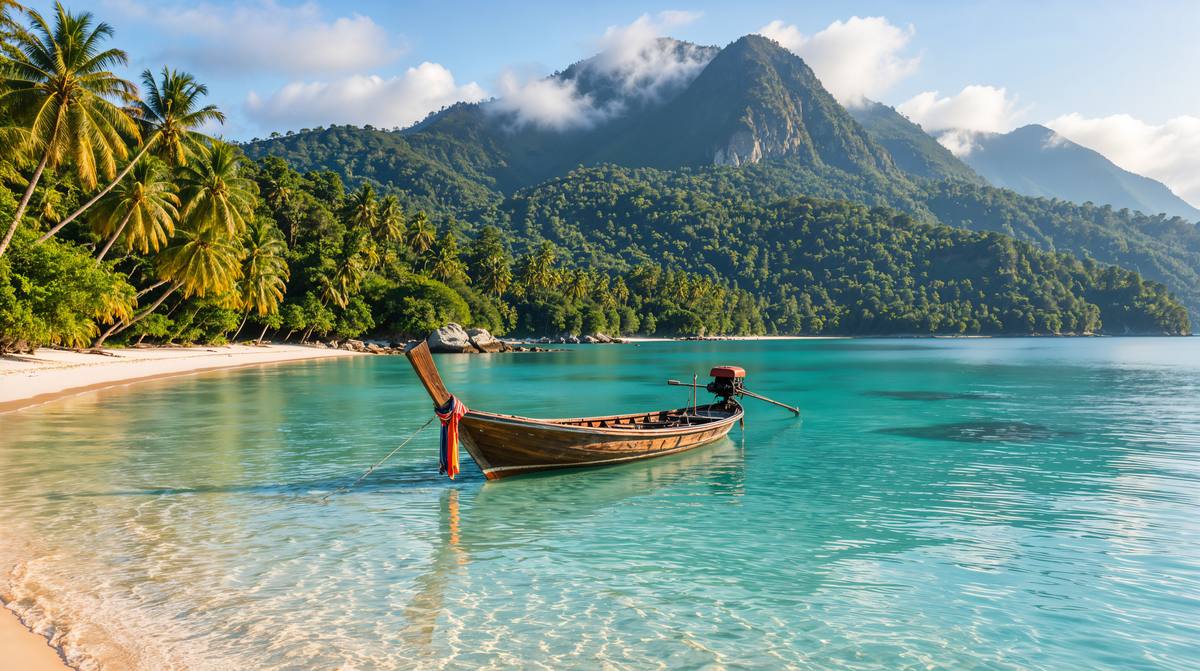
East
Koh Chang
Koh Chang beach by beach: where to stay in peace, where the nightlife is, food, massage, markets, day trips, getting there by ferry and tips on steep roads.
Updated: 19 October 2026
Region
East
Green mountain island in the east
Best time to visit
November to February, driest in December and January. From May to October it rains very heavily.
Getting there
Flight to Trat or bus from Bangkok, then car ferry from Ao Thammachat in about 25 to 40 minutes
Top highlights
- Around a dozen beaches on the west coast, from party beach to quiet bay
- Khlong Phlu waterfall with a natural pool
- Snorkelling trips to the shallow reefs of Koh Rang
Rain and temperature through the year
- Jan37 mm, 32 °C, drynow
- Feb86 mm, 32 °C, changeablenow
- Mar115 mm, 32 °C, changeablenow
- Apr185 mm, 33 °C, rainy seasonnow
- May427 mm, 33 °C, rainy seasonnow
- Jun830 mm, 31 °C, rainy seasonnow
- Jul972 mm, 31 °C, rainy seasonnow
- Aug1040 mm, 30 °C, rainy seasonnow
- Sept681 mm, 31 °C, rainy seasonnow
- Oct377 mm, 32 °C, rainy seasonnow
- Nov74 mm, 32 °C, changeablenow
- Dec21 mm, 32 °C, drynow
Line: average daily high in °C. Band and number: rain in mm per month · Weather data: Station Trat, ca. 68 km entfernt · Source: Thai Meteorological Department (TMD), Klimamittel 1981–2010, gerundet · Weather in Koh Chang in detail
Contents of this article12 sections
Koh Chang means “Elephant Island” and is the third-largest island in Thailand after Phuket and Koh Samui. It lies in Trat province, around 400 kilometres east of Bangkok. More than 70 percent of the mountainous island is covered in rainforest. There are hardly any big hotel blocks, and most resorts are scattered along the coast.
Almost everything happens on the west coast. One beach follows the next there: White Sand Beach has the most going on, Klong Prao is quiet and more for couples, and on Lonely Beach the backpackers party into the night. The east coast is quiet, with fishing villages, mangroves and hardly any tourists.
Getting there
Trat has a small airport with several flights a day from Suvarnabhumi. A shuttle bus runs from the airport to the ferry port. Alternatively, coaches, minibuses and vans take you from Bangkok to Trat.
You reach the island by car ferry. It leaves from the pier at Ao Thammachat on the mainland and sails to Ao Sapparot in the north-east of the island. The crossing takes about 25 to 40 minutes, depending on the ship. According to the timetable (as of April 2026), the first ferry leaves at 6:30 am and the last at 6:30 pm, and in high season they often run every 20 to 30 minutes. Since April 2026, an adult ticket costs 90 baht. Tickets are only sold at the pier and only for cash.
If you come by car, expect waiting times of one to two hours on public holidays and long weekends, sometimes considerably more. Without a car you get across faster.
If you spend a few days in Pattaya beforehand, you can combine both on one trip to the east.
Getting around the island
There is no road all the way around the island. The road runs like a horseshoe from the ferry port in the north-east down the west coast to Bang Bao and down the east coast to Salak Phet. In the south there is a gap of around ten kilometres between the two ends. The plan is to close the gap by early 2030, but no construction company has been found yet and nothing is being built. If you want to get from the west coast to Salak Phet, you therefore have to go the long way round via the north.
There are no metered taxis, tuk-tuks or Grab on Koh Chang. You travel by songthaew, white pick-ups with two benches on the back that run up and down the west coast. The ride from the ferry port to White Sand Beach costs 50 baht, to Klong Prao 70, to Kai Bae 80, to Lonely Beach 100 and to Bang Bao 150 baht per person. The list dates from the 2023/24 season, so it may be a little more now. Ask before you get in.
During the day the songthaews run regularly, but after dark it gets harder. Then you usually ride alone and negotiate the price, and after 10 pm a surcharge is added. Have the restaurant or hotel book your ride back. Songthaews rarely go to the east coast.
The west coast beaches from north to south
All the beaches on the west coast face the sunset. The tides matter. In the Gulf of Thailand there is only one high tide and one low tide a day, and on some beaches the sea retreats a long way at low tide. If swimming matters to you, bear this in mind when choosing a beach.
Klong Son
The first place after the ferry port in the north-west is a Thai village with a temple, fishermen and supermarkets. The bay is long and shallow, and parts of it dry out at low tide. It is hardly suitable for swimming, but fine for walks. It is very quiet here, but you will not get far without your own vehicle.
White Sand Beach
White Sand Beach (Hat Sai Khao) is the busiest beach on the island, with the widest choice of hotels, restaurants and bars. It is good for swimming. This applies above all to the northern part, where the sand is fine and the water calm and shallow. In the south the beach gives way to rocks.
Everything is within walking distance here: pharmacies, currency exchanges, supermarkets and the island’s international hospital. The crowd is on average older than on Lonely Beach. In the evening people sit in beach bars, and in several places there is live music and fire shows on the sand.
At the south end there are several rows of beer bars, known on the island as “Mini-Pattaya”. If you want peace and quiet, you are better off staying in the northern part.
Pearl Beach
Pearl Beach lies between White Sand Beach and Klong Prao. There is no sandy beach here, only pebbles and stones. It is no good for swimming, but you can snorkel well off the coast. Most people staying here are long-stayers with their own vehicle. There is a Big C on the road for a big shop.
Klong Prao and Chai Chet
Klong Prao is one of the longest beaches on the island and is divided into three sections separated by small rivers. The northern part is called Chai Chet and is the best for swimming, as the water gets deep quickly. In the middle the sea retreats at low tide further than anywhere else on the island. In the south there are stones in the water, and water shoes are handy there.
There are many upmarket resorts here, the crowd tends to be older and there is hardly any nightlife. In the evening people sit at the beach bars at the south end for the sunset. On the road in Chai Chet there are a few beer bars, a 7-Eleven, a Lotus’s and the immigration office for visa extensions. For me, Klong Prao is the beach with the best mix of peace and quiet and short distances.
Kai Bae
Kai Bae now has the biggest choice of restaurants on the island. There is a small walking street with bars, cocktail and wine bars, and live music on some evenings. The beach is split by a river. The north and south ends are good, the middle is rocky and almost disappears at high tide. So Kai Bae is not an ideal beach for swimming, but its position between the other beaches is practical.
South of Kai Bae the road climbs steeply. At the top is the viewpoint over the small islands off Kai Bae, the best-known spot for the sunset. In high season you should get there early.
Lonely Beach
Lonely Beach (Hat Tha Nam) is where the backpackers meet. The beach in the north is wide even at high tide and, with its fine sand, one of the most reliable on the west coast. In the village behind it the bars are packed close together, with happy hour, fire shows and loud music, and some stay open until morning. In high season there is a party somewhere almost every night.
If you are a light sleeper, you should not stay near the bars here. For a sundowner at one of the quieter beach bars in the north, the detour is still worth it.
Bailan
Bailan Bay lies one to two kilometres south of Lonely Beach. The coast here is mostly rocky, and you can only swim at high tide. In return it is quiet and cheap, with small bungalows and little nightlife. At the south end, Lisca Beach is a small stretch of sandy beach.
Bang Bao
Bang Bao is not a swimming resort but a fishing village built on stilts out into the sea. Along the long, covered jetty there are souvenir shops, diving schools and seafood restaurants. Today it is more of a shopping street than a fishing village. Most snorkelling tours and boats to the neighbouring islands start from here. The boats set off in the morning and come back in the afternoon, when the jetty is crowded. In between it is quieter. Bang Bao is no good for swimming.
Klong Kloi
Klong Kloi is the last beach on the road, about two kilometres beyond Bang Bao. The sand is fine and the water is calm all year round, so you can swim at low tide and at high tide. Trees provide plenty of shade. Because the bay is sheltered, it is often a good place to swim even in the rainy season. Day trippers come during the day, and in the evening it gets very quiet. There is no cash machine here, and White Sand Beach is half the island away.
South and east coast
You can reach Long Beach (Hat Sai Yao) in the far south-east only via the east coast. The beach is long and the water clear, but a lot of rubbish washes up there, especially in the rainy season. There are simple bungalows and no cash machine. Even more remote is Wai Chek, a wild beach with no infrastructure at all. The track there is impassable after rain. I would go by boat from Klong Kloi.
On the east coast itself there are hardly any swimming beaches, only narrow stretches of red sand and gravel. On the other hand it is quiet and Thai in character, with little traffic. The island’s state hospital is in Dan Mai.
Salak Kok is a fishing village in a mangrove bay. There is a wooden jetty with a lookout tower, and for 200 baht you can take a rowing boat through the mangroves for about 45 minutes. Further south lies Salak Phet, a fishing and durian village where many Thai day trippers go to eat at the weekend. A long jetty leads through the mangroves, but in early 2026 it was in poor condition in places.
Which beach suits you
If you want everything within walking distance, stay in the northern part of White Sand Beach. If you are after peace and quiet, good resorts and still short distances, Klong Prao is the place. Kai Bae suits you if restaurants matter more to you than a perfect swimming beach. Lonely Beach is for night owls. And if you mostly want to lie on the beach and swim, you will find your bay at Klong Kloi.
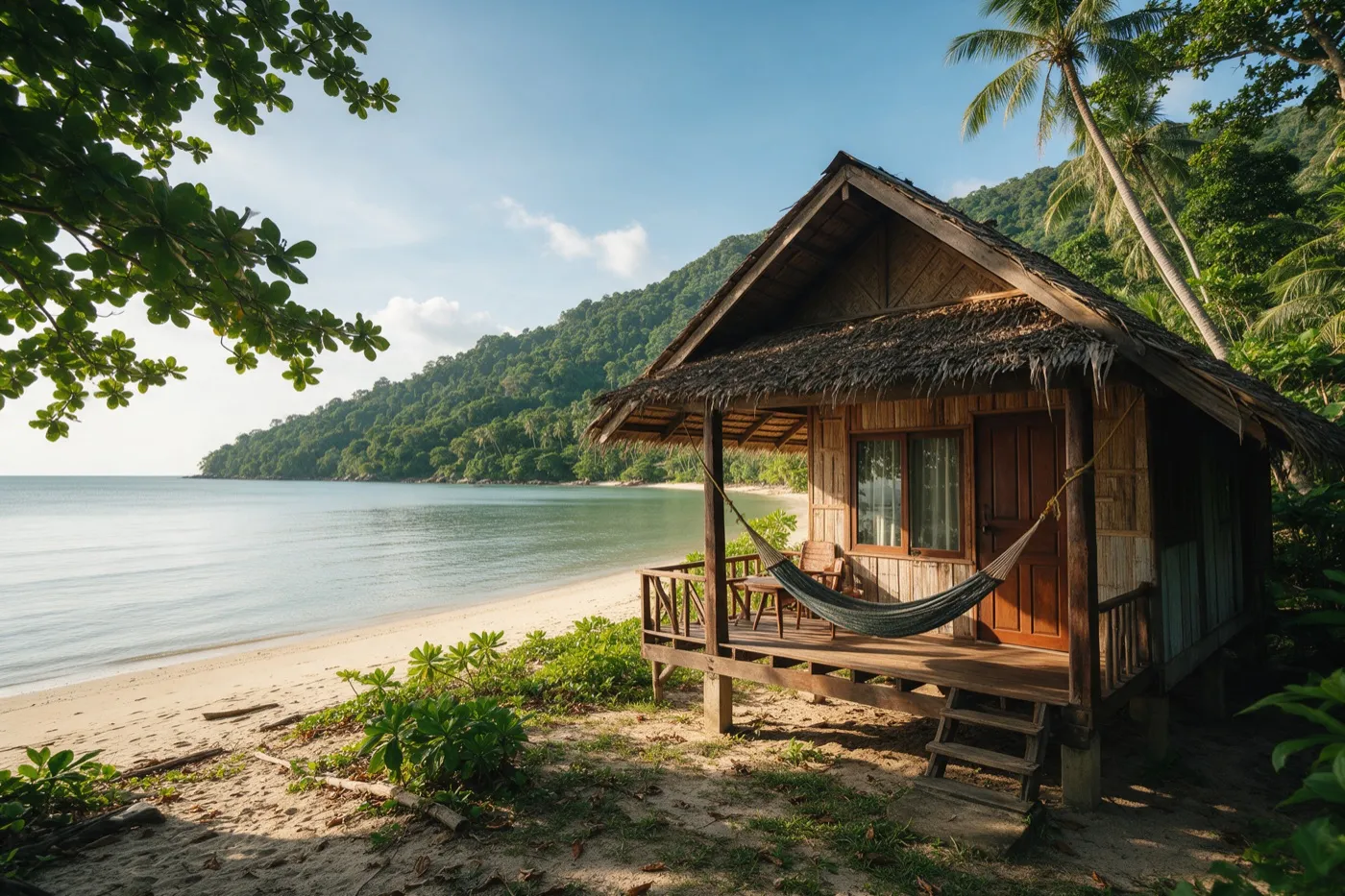
Staying on Koh Chang is very different depending on the stretch of beach: in the north with everything within walking distance, in Klong Prao with resorts and peace, on Lonely Beach for night owls. You can compare hotels on Koh Chang by beach and price in advance.
Food
The cheapest places to eat are the street kitchens and small eateries on the inland side of the road. A curry with rice or a noodle soup costs 40 to 70 baht, Thai dishes in a restaurant 100 to 200 baht. A whole fish costs 200 to 350 baht, depending on weight. With fish, ask beforehand what the whole fish costs.
The beach restaurants at White Sand Beach tend to taste much the same, and the Thai food there is toned down for tourists. You eat better a few steps further along the road. Kai Bae has the biggest choice of Western food.
For seafood, head to the fishing villages. In Bang Bao you sit on the jetty over the water, but you pay more than elsewhere. In Salak Phet and Salak Kok on the east coast you eat in places on stilts over the bay, in Salak Kok in a village cooperative. At lunchtime and at weekends, Thai coach groups arrive there. Take cash with you, as there are hardly any cash machines on the east coast.
Trat province is known for its fruit, above all durian. The harvest season is in spring. If you come in winter, the fresh fruit is not available yet.
Nightlife
There are no big clubs on Koh Chang, only a few small ones at White Sand Beach. Nightlife takes place in bars on the beach and on the road.
Lonely Beach is where people party, often until morning. White Sand Beach has live music, fire shows and beach bars, plus the beer bars at the south end. Kai Bae has the walking street with small bars and quieter cocktail bars. In Klong Prao little happens in the evening, and a few beach bars stay open for the sunset. In Bang Bao and on the beaches in the south it is relaxed, with reggae and acoustic guitar. On the east coast nothing happens in the evening.
In the rainy season from May to October there is much less going on, and some places are closed.
Massage and wellness
You will find massage parlours on every beach, especially many at White Sand Beach, in Klong Prao and in Kai Bae. An hour of Thai massage costs 250 to 350 baht in a simple parlour (as of April 2026), and around double that in a resort spa. Several resorts have their own spas that also take outside guests. Yoga classes for day guests cost 100 to 400 baht.
Shopping and money
For the weekly shop there is a Big C at Pearl Beach, a Lotus’s in Klong Prao, Kai Bae and Klong Son and a Makro at White Sand Beach, plus several 7-Elevens on every beach. Western groceries and wine are available in smaller shops at White Sand Beach and in Kai Bae. You will find souvenirs, beachwear and tailors mainly at White Sand Beach and on the jetty at Bang Bao. Haggling is usual, and prices are higher than in Bangkok.
The island has no big night market like those in Bangkok. In the evening there is a street food market with food stalls at White Sand Beach, and in the other villages you will also find roadside stalls in the evening.
There are cash machines on all the big beaches, mostly in front of the 7-Eleven. With a foreign card you pay 220 baht per withdrawal (as of 2025). The ferry, songthaews and small eateries only take cash.
Day trips and activities
Waterfalls
The three-tiered Khlong Phlu waterfall behind Klong Prao has a natural pool with clear water where you can swim. On the east coast is Than Mayom. Both belong to the national park, foreigners pay 200 baht admission, and the ticket is valid for both on the same day. Khlong Nonsi on the east coast near Dan Mai and Khiri Phet in the south have no park admission fee, and at Khlong Nonsi you only pay a few baht to the landowner.
Snorkelling, diving and island hopping
Koh Chang is the largest of the 52 islands of the archipelago in Mu Koh Chang National Park. Most snorkelling tours leave from Bang Bao or Kai Bae to the shallow reefs near Koh Rang and on to Koh Wai. A tour on one of the big wooden boats costs 750 to 800 baht, more by speedboat (as of April 2026). On top of that there is a 200 baht park fee for Koh Rang, which you usually pay in cash on the boat. The boats leave around 9 am and are back in the afternoon. Several diving schools offer courses for beginners, and the best time for diving is October to May.
You can also reach the neighbouring islands from here. Koh Wai has simple beach huts and good snorkelling spots, Koh Mak is flat and green with coconut and rubber plantations, and Koh Kood has rainforest and the Khlong Chao waterfall. The speedboats and wooden boats run from early November to the end of April. A one-way trip by wooden boat costs about 400 baht to Koh Wai, 500 to Koh Mak and 700 to Koh Kood, and the speedboat considerably more. Hotel pick-up is usually included.

Koh Chang: big boat tour to 3 or 4 islands with snorkelling and lunch
By big boat to three or four islands off Koh Chang, with snorkelling and lunch.
- 5.5 to 9 hours
- Guide in English
- Free cancellation up to 24 hours in advance
from €25 per personAs of 21 October 2026
 Check availability
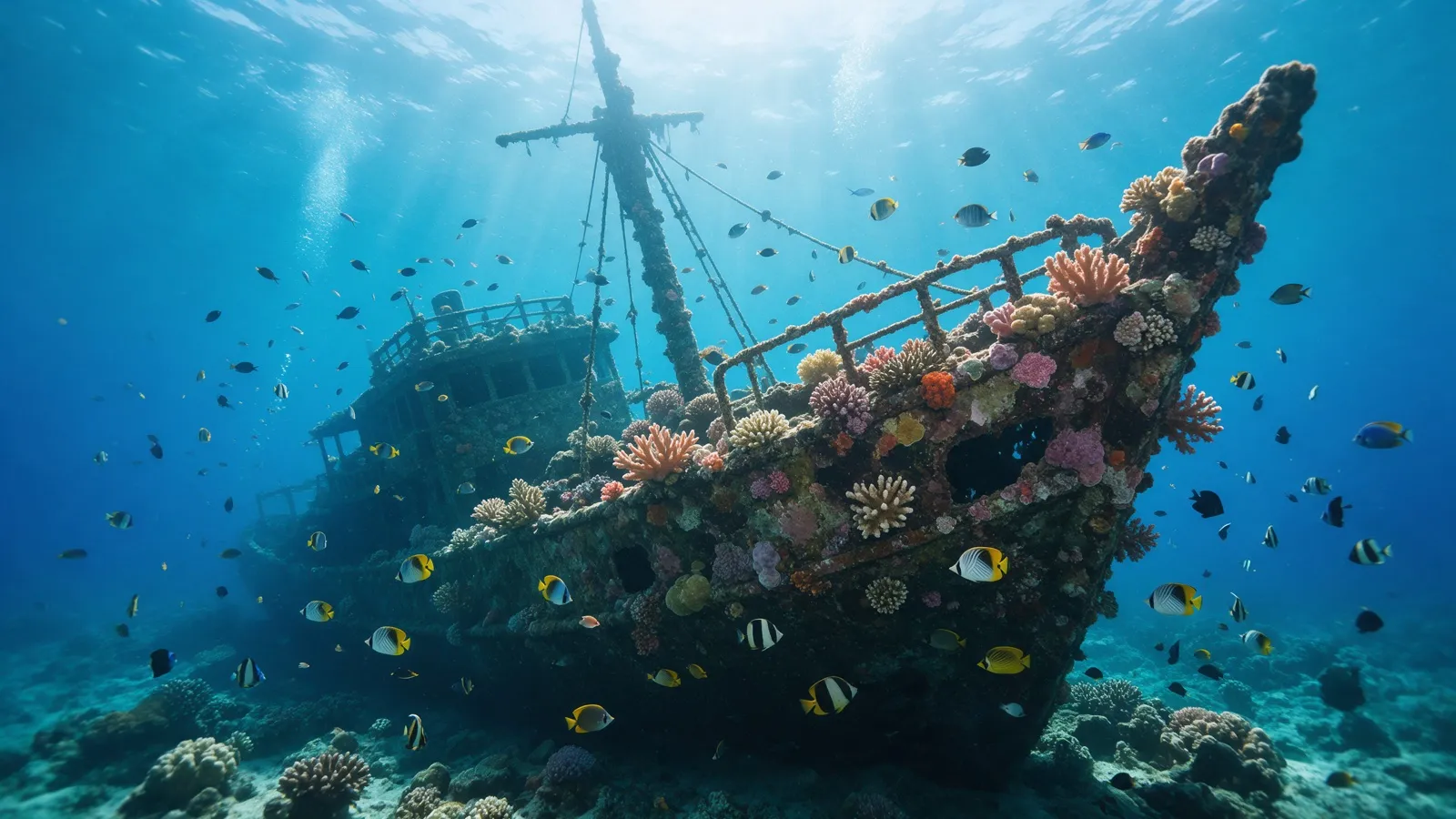
Koh Chang: snorkelling trip to reefs or shipwrecks with lunch
Snorkelling at reefs or shipwrecks off Koh Chang, with lunch and pick-up.
- 7 hours
- Guide in English and Thai
- Free cancellation up to 24 hours in advance
from €27 per personAs of 21 October 2026
Check availabilityKayaking, hiking and cooking classes
By kayak you can paddle up the river in Klong Prao into the hinterland, best at high tide in the early morning or late afternoon. Many resorts rent out kayaks.
It is best to go into the rainforest with a guide. The paths are not marked, and for some routes a guide is compulsory. If you like cooking, you can book one of the cooking classes on the island, which cost 1,200 to 2,000 baht including pick-up.
A word about the elephants
There are several elephant camps on Koh Chang where you can ride the animals. None of them is a real sanctuary, and the animals are kept on chains. I would skip the riding. If you want to see elephants with a clear conscience, you will find genuine rescue centres on the mainland, for example in Chiang Mai.
Tips for travellers over 50
Koh Chang is mountainous, and the road on the west coast is demanding. South of Kai Bae it becomes very steep and narrow towards Bang Bao, with blind crests, hairpin bends and no guard rails. Most of the island’s scooter accidents happen there. The hill between Klong Son and White Sand Beach is steep too, and it is especially dangerous in the rain and in the dark. I would not get on a scooter myself there, and would take the songthaews instead.
In Thailand there are many fatal road accidents, and 70 percent of the victims are on two-wheelers. A helmet is compulsory, and motorbikes are often uninsured. You may only ride with an international driving licence together with the German one.
Koh Chang International Hospital at White Sand Beach belongs to the Bangkok Hospital group and has an emergency department open around the clock. Serious cases are taken by speedboat to Bangkok Hospital Trat on the mainland. Good travel health insurance with repatriation is particularly important here.
Do not underestimate the sea. In the monsoon there are dangerous currents on the west-coast beaches. When the red flag is up and the sea is rough, I would not go in further than I can stand.
I would go to the waterfalls early in the morning and take enough water. In March and April it gets really hot, so keep hikes to the morning. Do not feed the monkeys at the roadside. There have been attacks on visitors in the national park. On quiet beaches there are sandflies, so lie on a towel or a mat rather than directly on the sand.
Trat province borders Cambodia. The Federal Foreign Office warns against travel to the border area (within 20 kilometres of the border), and all border crossings to Cambodia are closed. Check the current situation before you travel and skip excursions towards the border.
Best time to visit
The nearest weather station with long-term data is in Trat on the mainland, around 70 kilometres away. Its data show that December and January are driest, and November and February are changeable. From March the rain increases, and from May to October it rains very heavily, most of all in August. In the monsoon the sea gets rough and some resorts close. The speedboats and wooden boats to Koh Mak and Koh Kood then do not run, and usually only one ferry a day runs. The ferry to the island runs all year. You can see all the monthly figures on the weather page for Koh Chang.
What you need before you fly is covered in Entry to Thailand 2026. You can read roughly what a day there costs in Costs in Thailand per day.
Comparison
Not sure whether this place is the right one? Here are the differences side by side:
Continuing by ferry? In the island hopping planner you can see which boats leave from Koh Chang, how long they take and what they cost.